
HEALTH
DIET
Optimize Meals with Body Rhythm: Personalized Nutrition Guide
Vinamra
|
Share to
Align meals with your body’s rhythm to boost digestion, energy, and weight loss. Get personalized nutrition tips for lasting health.
A food time table is just a schedule. It tells you what to eat and when. Simple enough. But here's what most people miss: when you line those meals up with your body's actual rhythm when you're awake, when you're moving, when your digestion is actually working everything gets easier.
The problem with generic meal plans isn't the food. It's that they don't know you. They don't know you're starving by 11 AM or that your lunch break is a moving target. A time table that accounts for your actual life? That works. That's the core of personalized nutrition fitting the plan to the person.
Why Timing Actually Matters
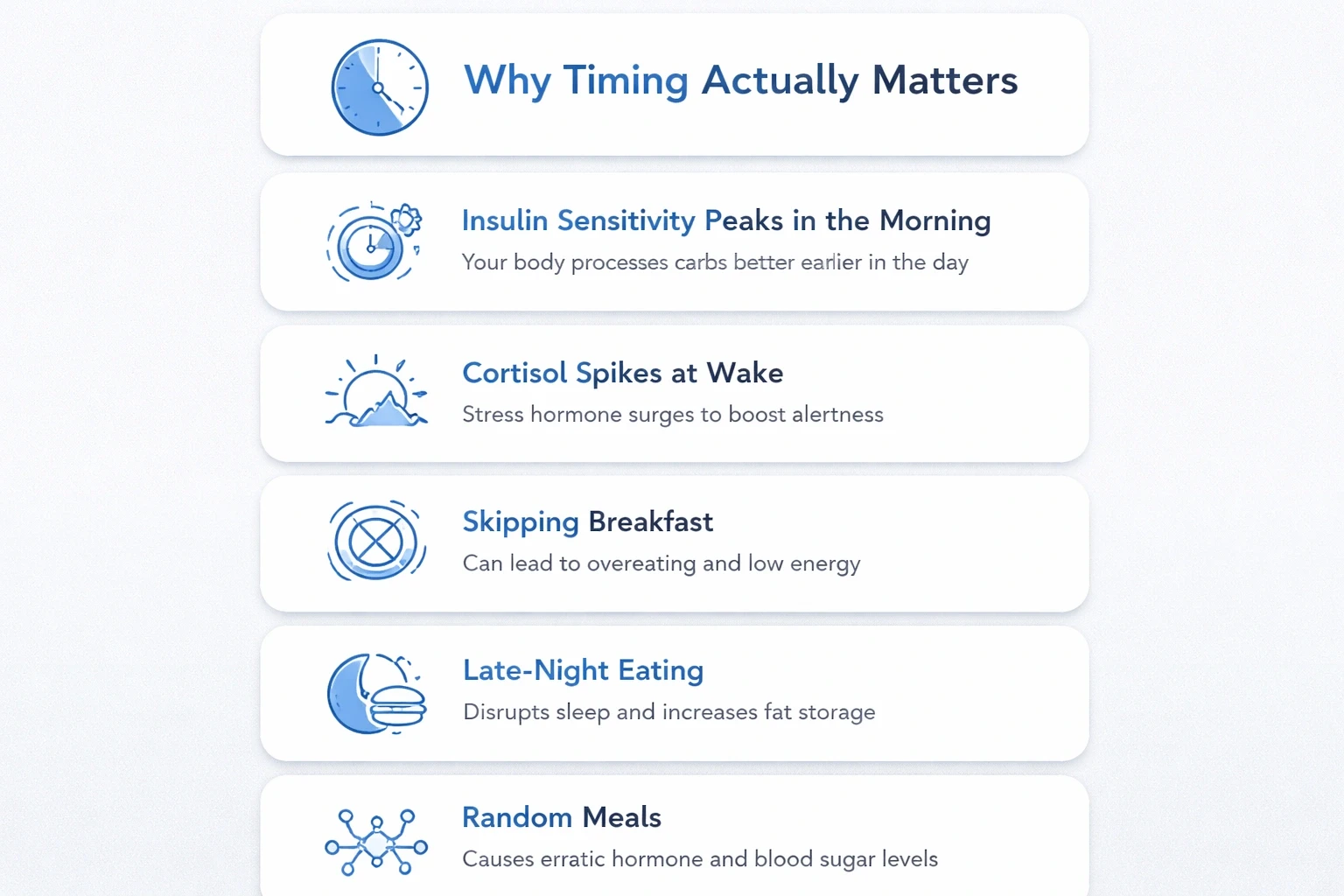
Your body has a clock. Insulin sensitivity the ability to process carbs peaks in the morning and drops at night. Cortisol spikes when you wake, essentially prepping your stomach for food.
Ignore this rhythm and things go sideways. Skip breakfast and your body conserves energy. Eat late at night and your digestion interferes with sleep. Eat randomly and your hunger hormones get unpredictable. A consistent schedule calms all of that down. It gives your body a rhythm it can trust.
There's real data here. People who eat most of their calories earlier in the day lose more weight than those who save them for dinner. This isn't about starving yourself after 6 PM. It's about front-loading your energy when you actually need it. We cover this in more detail in our guide on how to eat lightly for better health.
The Upside of a Set Schedule
When you eat at the same times daily, your body anticipates food. It releases digestive enzymes before you take a bite. This is why bloating often disappears with consistent meal timing.
Energy levels stabilize. The 3 PM crash isn't inevitable; it's usually a blood sugar swing from a poorly timed lunch. A spaced-out schedule prevents that spike and drop.
For weight loss, a schedule does something unexpected: it builds trust. When your body knows food is coming, it's willing to burn fat between meals. When food is random, it hoards energy. This mechanism is why sustainable weight loss is rarely about willpower alone.
Sleep improves, too. Heavy meals right before bed force your body to work when it should be repairing. A proper time table, including low-calorie dinner options timed 2-3 hours before sleep, fixes this.
Building One That Fits
Start by watching yourself. Not the food the timing. For three days, note when you're actually hungry versus when you eat out of habit or stress. That's your real schedule.
Then factor in reality. Your commute, your meetings, your kids. If a plan doesn't fit your life, you'll drop it by Tuesday. A solid framework usually looks like this: breakfast within 90 minutes of waking, lunch 4-5 hours later, dinner 2-3 hours before bed. If the gap between lunch and dinner is huge, add a snack.
The spacing is key. You want 4-5 hours between main meals. This lets digestion finish and insulin drop. It's a mild form of intermittent fasting that teaches your body to switch between burning sugar and fat.
How It Looks in Practice
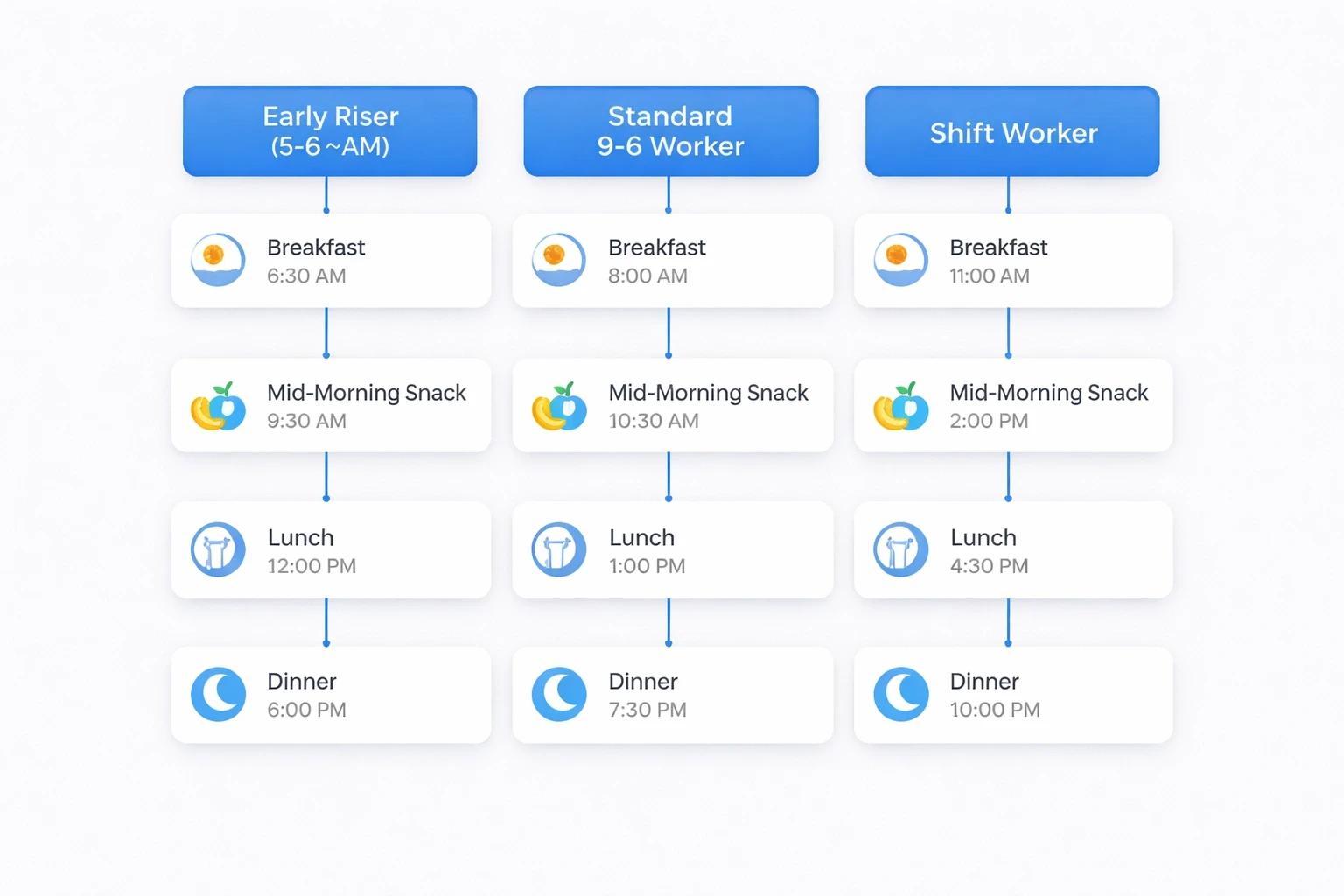
If you're an early riser (5-6 AM), try breakfast around 6:30. Something solid eggs and toast, poha with peanuts. Mid-morning fruit if you need it. Lunch at 1. Dinner by 7:30, kept light.
If you work a standard 9-6, the challenge is the evening. Breakfast at 8 is fine. You'll probably need a mid-morning snack around 11 to avoid a ravenous lunch. Dinner might get pushed to 8 or 8:30. That's okay, just keep the portions smaller.
Shift workers have a harder time. The clock matters less than the routine. Eat within 90 minutes of waking (whenever that is). Space meals out. Keep the pre-sleep meal light. Your body adapts to your rhythm, not the sun's.
If you're managing PCOS, diabetes, or gut issues, you might need smaller, more frequent meals every 3-4 hours to keep blood sugar steady. We build these variations into our tailor-made diet plans.
What to Eat When
Mornings (6-9 AM): This is your fuel. Protein, fat, complex carbs. Eggs, avocado toast, yogurt with nuts, moong dal chilla. This sets your blood sugar for the day.
Mid-morning (10-11 AM): If you're hungry, pair fruit with fat. A banana with almonds, an apple with peanut butter. It prevents the lunch-binge.
Lunch (12:30-2 PM): Make this count. Your digestion is strongest now. Protein, veggies, a carb source. Dal, rice, sabzi. Chicken, quinoa, greens. This meal carries your afternoon.
Afternoon (4-5 PM): Bridge the gap. Boiled eggs, chickpeas, a handful of nuts. Something small to keep you from overeating at dinner.
Evening: Shift gears. Think easy to digest. Grilled fish and veggies. A light soup. Khichdi with curd. You're not fueling activity anymore; you're prepping for repair.
Where People Go Wrong
Skipping breakfast. Your body interprets this as scarcity and slows your metabolism. Even a small bite within 90 minutes of waking signals that it's okay to burn energy.
Late dinners. Eating 2 hours before bed is the cutoff. Later than that, and you compromise sleep quality.
Weekend chaos. Shifting your meal times by 3-4 hours on Saturday and Sunday creates "social jet lag." It confuses your body clock. Consistency matters more than perfection.
Ignoring hunger. If you're starving an hour after breakfast, the schedule isn't the problem the breakfast is. You likely need more protein or fat. This is why generic diets fail they ignore the signals your body is sending.
When You Have to Adjust
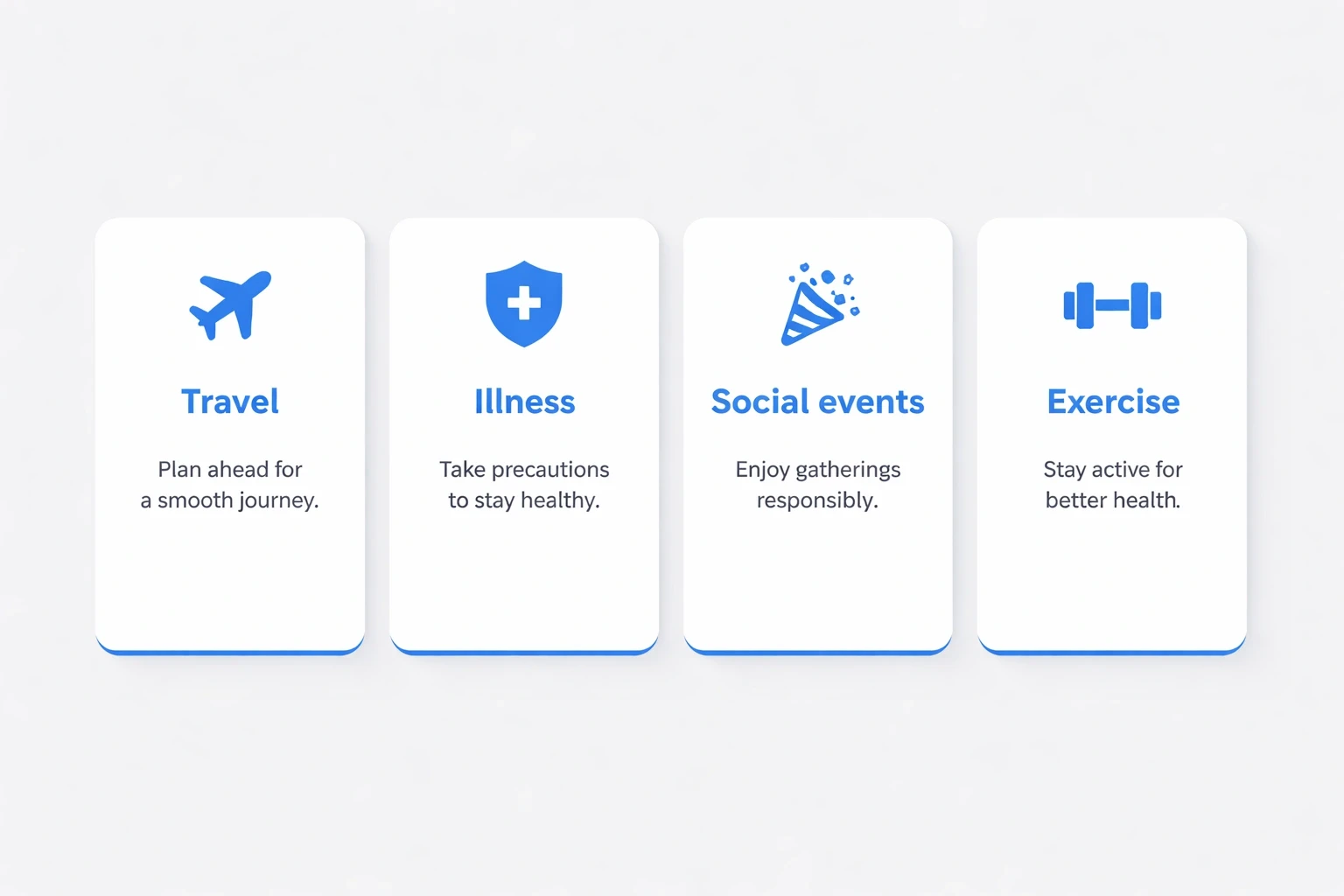
Travel: Shift your meals by 30-60 minutes a day before you leave. When you land, eat on local time. It resets your clock faster than melatonin.
Illness: Drop the strict schedule. Eat small amounts every 2-3 hours. Your body needs nutrients but can't handle volume.
Social events: Don't "save" calories by starving beforehand. Have a protein-heavy snack before you go. Then get back to normal the next day.
Exercise: Morning workouts need fuel 30 minutes prior something fast like a banana or dates. Evening workouts need spacing; don't eat dinner too close to training.
Checking If It's Working
Give it two weeks. Track your energy, your sleep, your digestion.
If you're crashing at 3 PM, lunch needs more protein or fiber. If you wake up groggy, dinner was probably too late or too heavy. Weight is a lagging indicator. Digestion and energy tell the truth first.
Reassess every few months. Summer appetites differ from winter. A new job changes your rhythm. The plan should evolve.
Sticking With It
The first week is an adjustment. By week three or four, your body gets it. You stop thinking about food constantly because your hunger becomes predictable.
The mental load drops. You're not constantly deciding "when should I eat?" You just do it. That frees up space for everything else.
One off-day doesn't break it. You just return to the schedule the next day. That's the point. It's not a diet; it's a rhythm. Once it's set, it runs in the background. That's how you get results that last.
More Blog Post

HEALTH
DIET
Why Generic Diets Fail: Personalized Nutrition Tips for Your Body
Discover why generic diets fail and how personalized nutrition can fix fatigue, gut issues, weight plateaus, and hormone imbalances.
Team Vasundhara
|

HEALTH
DIET
Sustainable Weight Loss: Avoid Crash Diets & Fix Your Metabolism
Crash diets fail. Learn sustainable weight loss tips to fix metabolism, eat real food, and build healthy habits for lasting results.
Team Vasundhara
|
HEALTH
DIET
What Makes Food 'Light' and How to Eat Lightly for Better Health
Discover what makes food 'light' and how to eat lightly for better digestion, energy, and overall health without restriction. Learn about nutrtion and diet
Team Vasundhara
|

HEALTH
DIET
Low-Calorie Dinner Ideas for Better Sleep & Energy
Discover low-calorie dinner recipes that boost sleep, reduce blood sugar spikes, and keep you energized. Nutrient-dense, satisfying meals under 450 calories. Read more.
Team Vasundhara
|
HEALTH
DIET
Optimize Meals with Body Rhythm: Personalized Nutrition Guide
Align meals with your body’s rhythm to boost digestion, energy, and weight loss. Get personalized nutrition tips for lasting health.
Team Vasundhara
|
HEALTH
DIET
Healthy Workplace Snacks to Avoid the 3 PM Crash | Vasundhara
Protein‑rich, nutrient‑dense snacks to keep you energized all day and prevent the 3 PM crash. Smart office snacking. #HealthyWorkplace #WeightLoss
Team Vasundhara
|

HEALTH
DIET
Smart Evening Snacks: Fuel Your Body, Not Your Cravings
Learn why you get hungry at night, how smart snacks prevent overeating, boost sleep, and aid sustainable weight loss.
Team Vasundhara
|
HEALTH
DIET
Beat the 4 PM Slump with Healthy Snacks | Metabolism Health
Beat the 4 PM slump with smart snacks. Protein, fiber & healthy fats keep you full, avoid crashes. Sustainable weight loss starts now.
Team Vasundhara
|
HEALTH
DIET
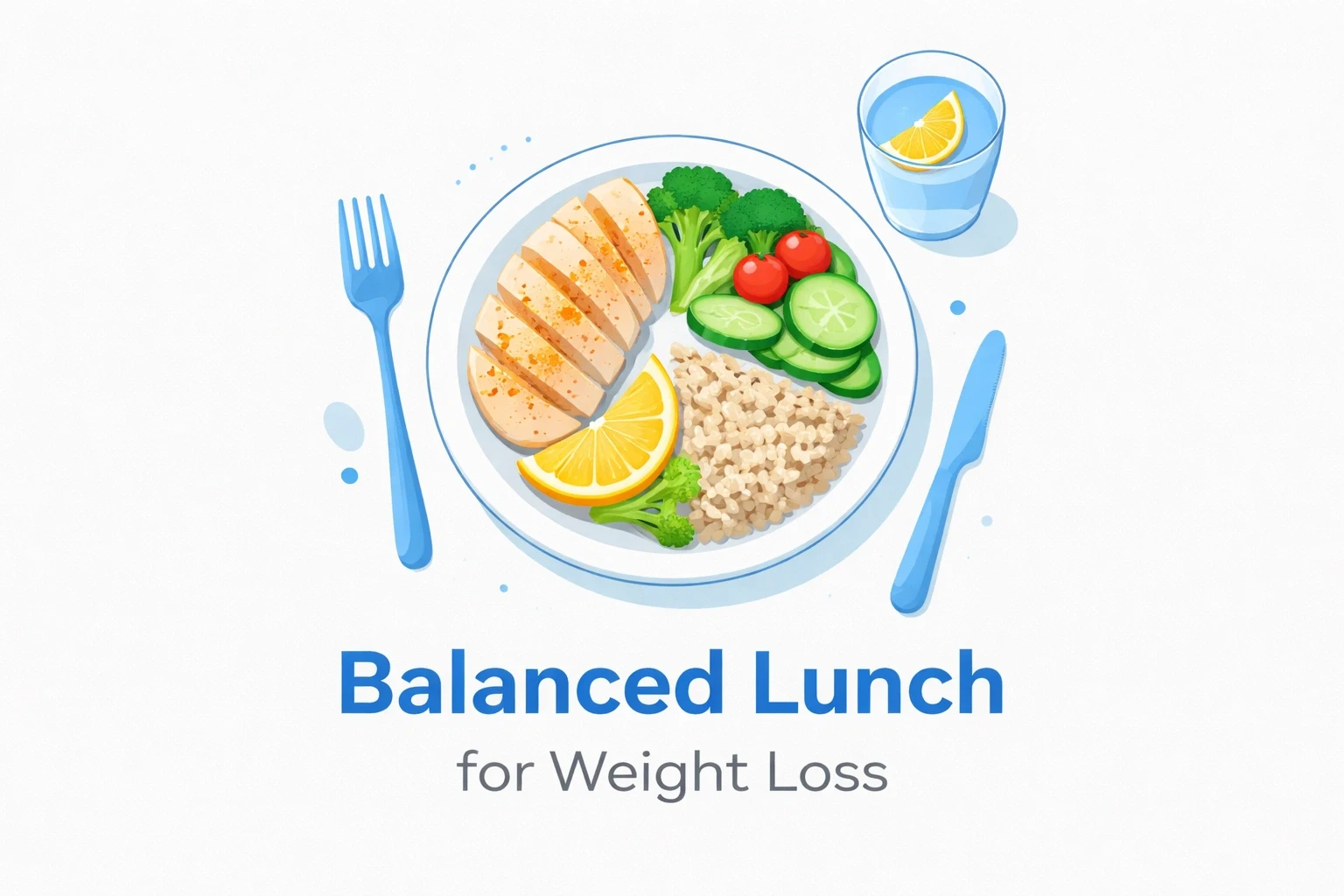
Lunch Fix: 30% Protein, 40% Veggies, 30% Carbs for Weight Loss
Discover the 30% protein, 40% veggies, 30% carbs lunch formula to stabilize blood sugar and avoid cravings. Simple, effective, and easy to prepare.
Team Vasundhara
|
HEALTH
DIET
The Science of Mid-Morning Snacks: Boost Metabolism & Energy
Discover why mid-morning snacks boost metabolism, balance hormones, and prevent overeating. Explore 10 healthy options for sustained energy.
Team Vasundhara
|
HEALTH
DIET
Healthy Office Lunch Ideas: 30-40-30 Formula for Energy
Pack a nutritious office lunch using the 30-40-30 formula. Stay full, avoid crashes, and boost productivity with simple lunch box tips.
Team Vasundhara
|
HEALTH
DIET
Smart Snacking Strategies for Healthy Weight Gain
Effective weight‑gain snack ideas that support digestion, avoid empty calories, and boost nutrient intake for sustainable muscle growth.
Team Vasundhara
|
HEALTH
DIET
Healthy 4 PM Snacks to Avoid Evening Binges
Healthy 4 PM snack ideas to stabilize blood sugar, prevent evening binges, and support weight loss, PCOS, and metabolism with nutrient-dense options.
Team Vasundhara
|

HEALTH
DIET
The 30-40-30 Lunch Formula: Beat Afternoon Slumps
Discover the 30-40-30 lunch formula for sustained energy. Balance protein, veggies, and carbs to avoid afternoon crashes and boost productivity.
Team Vasundhara
|