HEALTH
DIET
Healthy 4 PM Snacks to Avoid Evening Binges
Vinamra
|
Share to
Healthy 4 PM snack ideas to stabilize blood sugar, prevent evening binges, and support weight loss, PCOS, and metabolism with nutrient-dense options.
That 4 PM hunger hit is real. You're stuck between lunch and dinner, and what you grab now decides whether you eat sensibly later or unconsciously polish off a bag of chips while cooking. It’s a vulnerable window cortisol is dipping, blood sugar is dropping, and willpower is running on fumes.
Getting this right matters, especially if you’re managing weight, PCOS, or just trying to avoid the 7 PM feast. It’s not about willpower; it’s about biology. Skip the afternoon bridge or load up on biscuits, and your body will notice. By dinner, you won't just be hungry; you'll be ravenous. That’s when the damage happens overeating at night when your body is winding down.
Why the Evening Snack Matters
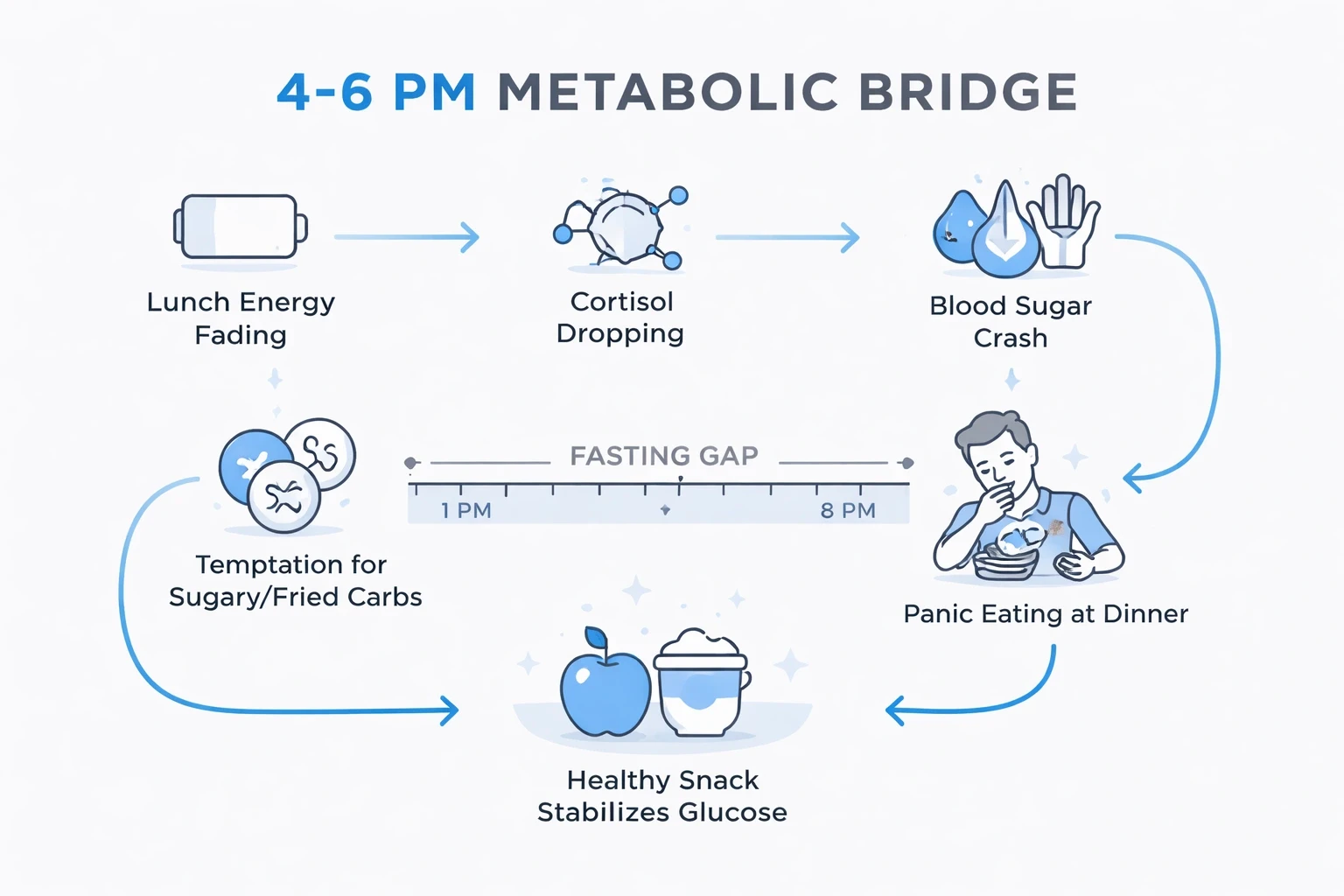
Think of the 4-6 PM window as a metabolic bridge. Your body is transitioning. Lunch energy is fading, cortisol is dropping. Without a decent snack, your blood sugar crashes, triggering a hunt for quick energy. Usually, that means sugar or fried carbs.
If you skip it, you're essentially fasting from 1 PM to 8 PM. By dinner, your body is in mild panic mode. You eat faster, you eat more, and you pick the wrong things. Keeping glucose steady with a proper snack prevents that crash-and-binge cycle.
This is critical for anyone with insulin resistance or PCOS. Those blood sugar swings hit harder, disrupting hormones and potentially spiking evening cortisol, which ruins sleep. The metabolism-boosting approach used for mid-morning works here too: prioritize real food over processed snacks.
The Tea-Time Formula
You don't need a complex algorithm. You need three things: protein, fiber, and healthy fats. Aim for roughly 150-200 calories.
Protein (the anchor): This stabilizes blood sugar. Think boiled eggs, paneer, yogurt, or chickpeas. It digests slowly, keeping you full.
Fiber (the filler): This slows digestion and prevents that sugar spike. Cucumber, peppers, tomatoes, guava, or berries.
Healthy Fat (the satiety signal): A few almonds, walnuts, or a teaspoon of peanut butter. It tells your brain "we're done eating."
Compare this to the usual tea-time fare biscuits or namkeen. Those are just refined carbs and bad fats. They spike insulin and leave you hungry 30 minutes later.
12 Smart Evening Snacks
1. Sprouted Moong Chaat: Toss sprouted moong with onions, tomatoes, cucumber, lemon, and chaat masala. Simple, filling, and about 180 calories with 12g protein.
2. Paneer Tikka Skewers: Grill paneer cubes with peppers and onions. Minimal oil, plenty of flavor. You get 15g protein in a satisfying portion.
3. Egg and Veggie Muffins: Bake eggs with spinach and veggies in muffin tins. Make a batch on Sunday for the week. 10g protein each, almost no carbs.
4. Roasted Chickpea Trail Mix: Chickpeas, almonds, pumpkin seeds, black salt. A 30g handful gives you 8g protein and 6g fiber.
5. Greek Yogurt with Berries: Unsweetened yogurt, berries, flaxseeds. Probiotics, antioxidants, 15g protein.
6. Veggie Sticks with Hummus: Carrots, cucumber, peppers. The chickpeas in hummus provide protein, the veggies add crunch and volume.
7. Masala Buttermilk & Makhana: Spiced buttermilk paired with roasted fox nuts. Hydrating, crunchy, and light.
8. Fruit & Nut Energy Balls: Dates, almonds, oats blended together. Two balls satisfy a sweet tooth without refined sugar.
9. Tomato Soup with Seeds: Homemade soup topped with pumpkin seeds. Warm, filling, and the seeds add zinc and magnesium.
10. Boiled Egg & Toast: One egg, a slice of multigrain bread, some cucumber. A mini-meal that prevents dinner overeating.
11. Cottage Cheese Salad: Cottage cheese, chopped veggies, mint, lemon. 18g protein, minimal calories.
12. Baked Sweet Potato Chaat: Cubed sweet potato tossed with chickpeas and pomegranate. Complex carbs and fiber.
These align with healthy workplace snacking principles nutrient density over empty calories.
What to Drink
Your beverage choice matters as much as the snack. Traditional chai with sugar adds 100-150 calories and spikes insulin the opposite of what you want.
Green tea: Catechins boost fat oxidation. Mild caffeine lifts energy without the jitters.
Herbal teas: Chamomile, peppermint, ginger. Zero calories, good for digestion. Ginger helps insulin sensitivity.
Black coffee: Small cup, no sugar. Increases metabolic rate slightly. Try cinnamon instead of sugar.
Turmeric latte: Turmeric, low-fat milk, black pepper. Anti-inflammatory and satisfying.
Modified Masala Chai: Brew with cardamom, cinnamon, ginger. Cut the milk to 50ml and skip the sugar.
Drink it with your snack, not alone. It slows caffeine absorption. This mirrors the strategy in evening snack planning for better energy distribution.
Where People Mess Up
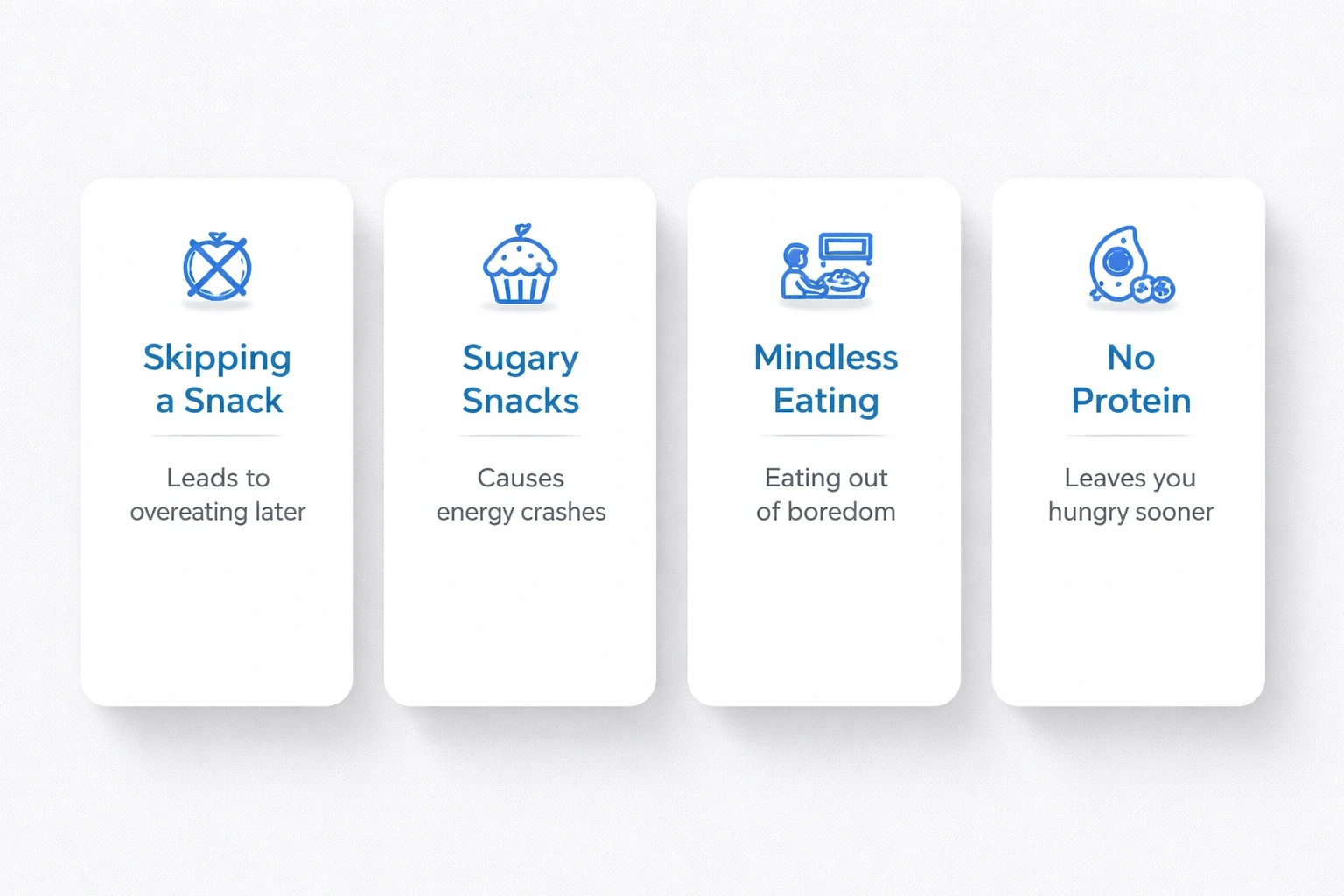
Skipping the snack: You think you're saving calories, but you just set yourself up to binge at dinner.
"Diet" processed foods: Low-fat biscuits usually have more sugar and salt. They digest fast; you're hungry again in 20 minutes.
Mindless eating: Staring at a screen while eating disconnects you from fullness signals. You eat twice as much.
Portion distortion: "Just a few" chips turns into half the bag. Pre-portion your snacks.
Wrong timing: Snacking at 6 PM is too close to dinner. Stick to 4-5 PM.
Fruit only: Fruit is healthy, but without protein or fat, it spikes blood sugar. Add nuts or yogurt.
Ignoring thirst: Thirst often masquerades as hunger. Drink water first.
These mistakes mirror the issues discussed in why generic approaches fail ignoring individual context.
Adapting for Your Goals
Weight loss: High protein, low calorie. Egg whites, cottage cheese, chickpeas. Keep it to 150 calories with fibrous veggies.
Muscle gain: Up the protein to 15-20g. Paneer with bread or yogurt with nuts. The weight gain strategies apply here too.
PCOS: Low-glycemic. Sprouted legumes, nuts, seeds, non-starchy veggies. Maybe skip the fruit during this window.
Gut health: Fermented foods. Buttermilk, homemade yogurt.
Energy & focus: Protein + complex carbs. Whole grain crackers with nut butter.
Diabetes: Pair protein and fat with carbs to slow absorption. Check your blood sugar an hour later.
Cardiac health: Unsalted nuts, seeds, omega-3s.
One size does not fit all. Your snack depends on your metabolic needs.
Making It Work in Real Life
Prep Sunday: Boil eggs, roast chickpeas, chop veggies. 30 minutes now saves you bad decisions later.
Office stash: Keep makhana, nuts, or a clean protein bar at your desk.
Travel: Pack roasted chickpeas or protein powder. Don't rely on airport food.
Social pressure: Bring your own snack to the chai break. You might start a trend.
Budget: Eggs, legumes, seasonal veggies are cheap. Homemade costs ₹15-25; processed snacks cost ₹50-100.
Family: Make big batches. Kids need these nutrients too.
Consistency beats perfection. The advice in beating the afternoon slump holds true here.
Why Timing Matters
Your circadian rhythm is real. Between 4-5 PM, cortisol drops. This is the window for protein and fat to support overnight repair without ruining sleep.
Eating too early (before 3 PM) means you're hungry again by 5. Too late (after 6 PM) crowds dinner.
It also aligns with productivity. The 4-5 PM focus dip is natural. Taking 15 minutes to eat resets your brain for the last push of the day.
If you work out in the evening, eat 90 minutes before. If you work out after work, this becomes your pre-workout fuel. This fits the body rhythm optimization concept work with your body, not against it.
Building Your Strategy
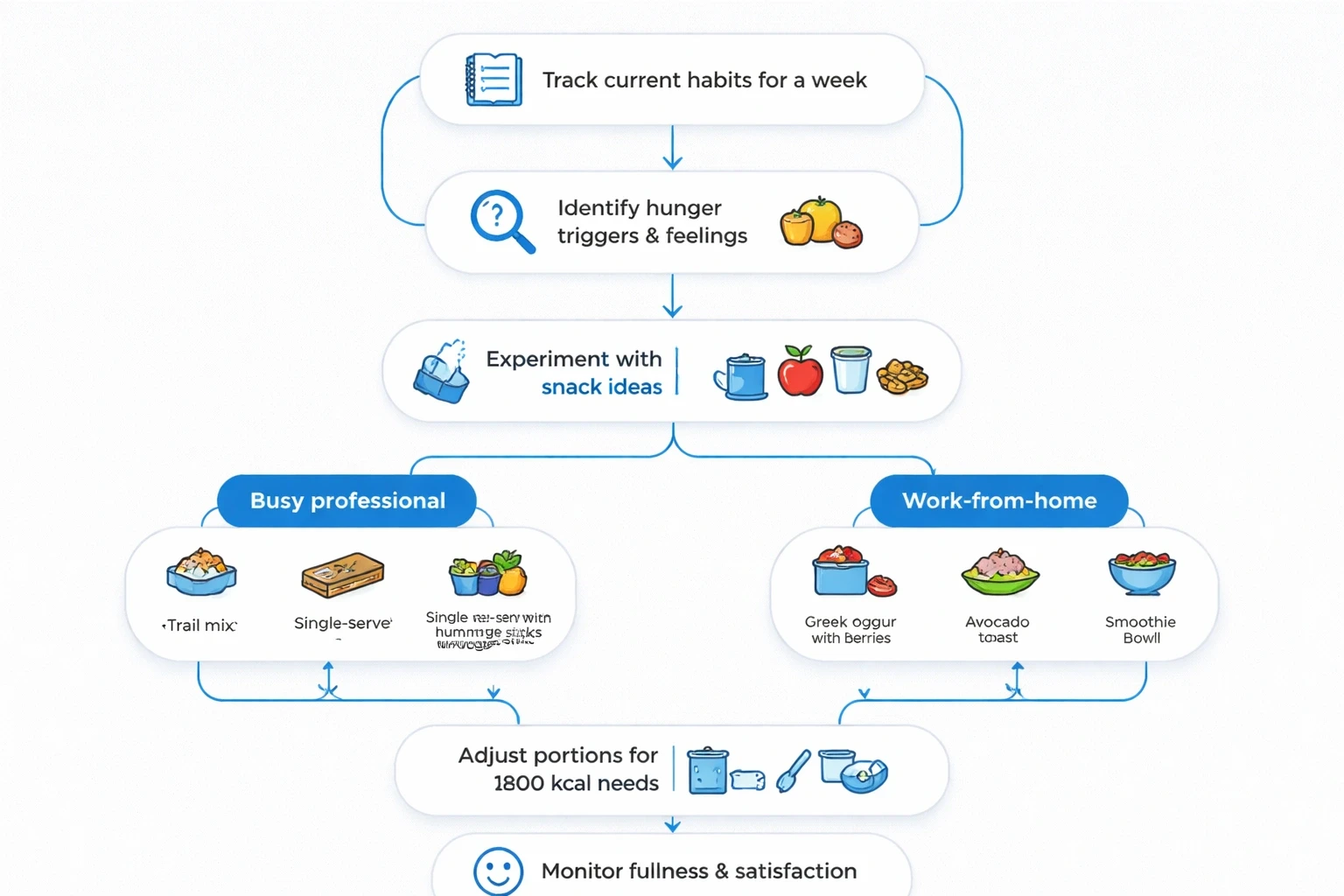
Track your current habits for a week. Note when you get hungry, what you grab, and how you feel. This baseline is more valuable than generic advice.
Experiment. Try the snack ideas here for a few days each. See what keeps you full and what tastes good. Your body will tell you what works.
Be realistic. A busy professional needs different solutions than someone working from home. Pick 4-5 options that fit your actual life.
Adjust portions. If you need 1800 calories a day, a 150-calorie snack works. If you need 2400, you can go up to 200-250. The portion control principles apply here.
Watch your progress. Not just weight look at energy, mood, sleep, and how easily you stick to it.
For complex medical needs, a tailored approach is worth the investment.
Fitting It Into the Whole Day
This snack is one piece of the puzzle. It works best when your breakfast has protein, your lunch follows the 30-40-30 formula, and your dinner is reasonable.
Think about total fiber. Most need 25-35g a day. If your snack gives you 6-8g, you're a quarter of the way there.
Rotate your choices. Monday's sprouts aren't Wednesday's eggs. Variety helps micronutrient intake.
Hydration matters too. Thirst often feels like hunger. Drinking water prevents false snacking.
This comprehensive view matches what effective personalized nutrition plans deliver coordinated daily patterns, not random choices.
Measuring Real Success
Forget the scale for a minute. Look at other markers.
Energy: Do you feel steadier between 5 and 8 PM?
Hunger: Do you arrive at dinner ready to eat, but not desperate?
Sleep: Are you sleeping better?
Workouts: Are you stronger during evening sessions?
Digestion: Less bloating, more regularity?
Compliance: Can you do this 5-6 days a week without hating it?
Labs: If you track biomarkers, are they moving in the right direction?
Sustainable weight loss is about habits that stick, not quick fixes.
The Bottom Line
The evening snack is a tool. Get it right, and it stabilizes blood sugar, curbs cravings, and makes dinner a non-event. Skip it, or grab junk, and you create a metabolic mess that undoes your good intentions.
The dozen options here are a starting point. Find what works for you. Prep ahead. Listen to your body.
If you want a plan that looks at your labs, your history, and your specific goals, check out the tailored nutrition plans here. A professional can help you skip the trial-and-error phase. But the basics are surprisingly simple: real food, right timing, right portions.
More Blog Post
HEALTH
DIET
Why Generic Diets Fail: Personalized Nutrition Tips for Your Body
Discover why generic diets fail and how personalized nutrition can fix fatigue, gut issues, weight plateaus, and hormone imbalances.
Team Vasundhara
|
HEALTH
DIET
Sustainable Weight Loss: Avoid Crash Diets & Fix Your Metabolism
Crash diets fail. Learn sustainable weight loss tips to fix metabolism, eat real food, and build healthy habits for lasting results.
Team Vasundhara
|
HEALTH
DIET
What Makes Food 'Light' and How to Eat Lightly for Better Health
Discover what makes food 'light' and how to eat lightly for better digestion, energy, and overall health without restriction. Learn about nutrtion and diet
Team Vasundhara
|

HEALTH
DIET
Low-Calorie Dinner Ideas for Better Sleep & Energy
Discover low-calorie dinner recipes that boost sleep, reduce blood sugar spikes, and keep you energized. Nutrient-dense, satisfying meals under 450 calories. Read more.
Team Vasundhara
|

HEALTH
DIET
Optimize Meals with Body Rhythm: Personalized Nutrition Guide
Align meals with your body’s rhythm to boost digestion, energy, and weight loss. Get personalized nutrition tips for lasting health.
Team Vasundhara
|
HEALTH
DIET
Healthy Workplace Snacks to Avoid the 3 PM Crash | Vasundhara
Protein‑rich, nutrient‑dense snacks to keep you energized all day and prevent the 3 PM crash. Smart office snacking. #HealthyWorkplace #WeightLoss
Team Vasundhara
|
HEALTH
DIET
Smart Evening Snacks: Fuel Your Body, Not Your Cravings
Learn why you get hungry at night, how smart snacks prevent overeating, boost sleep, and aid sustainable weight loss.
Team Vasundhara
|
HEALTH
DIET
Beat the 4 PM Slump with Healthy Snacks | Metabolism Health
Beat the 4 PM slump with smart snacks. Protein, fiber & healthy fats keep you full, avoid crashes. Sustainable weight loss starts now.
Team Vasundhara
|
HEALTH
DIET
Lunch Fix: 30% Protein, 40% Veggies, 30% Carbs for Weight Loss
Discover the 30% protein, 40% veggies, 30% carbs lunch formula to stabilize blood sugar and avoid cravings. Simple, effective, and easy to prepare.
Team Vasundhara
|
HEALTH
DIET
The Science of Mid-Morning Snacks: Boost Metabolism & Energy
Discover why mid-morning snacks boost metabolism, balance hormones, and prevent overeating. Explore 10 healthy options for sustained energy.
Team Vasundhara
|
HEALTH
DIET
Healthy Office Lunch Ideas: 30-40-30 Formula for Energy
Pack a nutritious office lunch using the 30-40-30 formula. Stay full, avoid crashes, and boost productivity with simple lunch box tips.
Team Vasundhara
|
HEALTH
DIET
Smart Snacking Strategies for Healthy Weight Gain
Effective weight‑gain snack ideas that support digestion, avoid empty calories, and boost nutrient intake for sustainable muscle growth.
Team Vasundhara
|
HEALTH
DIET
Healthy 4 PM Snacks to Avoid Evening Binges
Healthy 4 PM snack ideas to stabilize blood sugar, prevent evening binges, and support weight loss, PCOS, and metabolism with nutrient-dense options.
Team Vasundhara
|
HEALTH
DIET
The 30-40-30 Lunch Formula: Beat Afternoon Slumps
Discover the 30-40-30 lunch formula for sustained energy. Balance protein, veggies, and carbs to avoid afternoon crashes and boost productivity.
Team Vasundhara
|