HEALTH
DIET
Personalized Nutrition vs National Programs in India
|
Share to
Learn how India's National Nutrition Programs set health standards and how personalized nutrition tailors to individual needs for optimal results.
National Nutritional Programmes in India have done a lot of the heavy lifting for public health. They’ve tackled widespread deficiencies and set a baseline for what "adequate" looks like across a massive population. But there's a catch: they weren't built for you your specific hormones, your lifestyle, your metabolism. That’s where personalized nutrition comes in.
India has run some huge initiatives, from the National Nutrition Mission to the Mid-Day Meal Scheme. They matter because they define the floor for nutritional health. But baseline standards are very different from individual optimization, especially if you're managing PCOS, thyroid issues, or specific weight goals.
What Is the National Nutritional Programme in India?
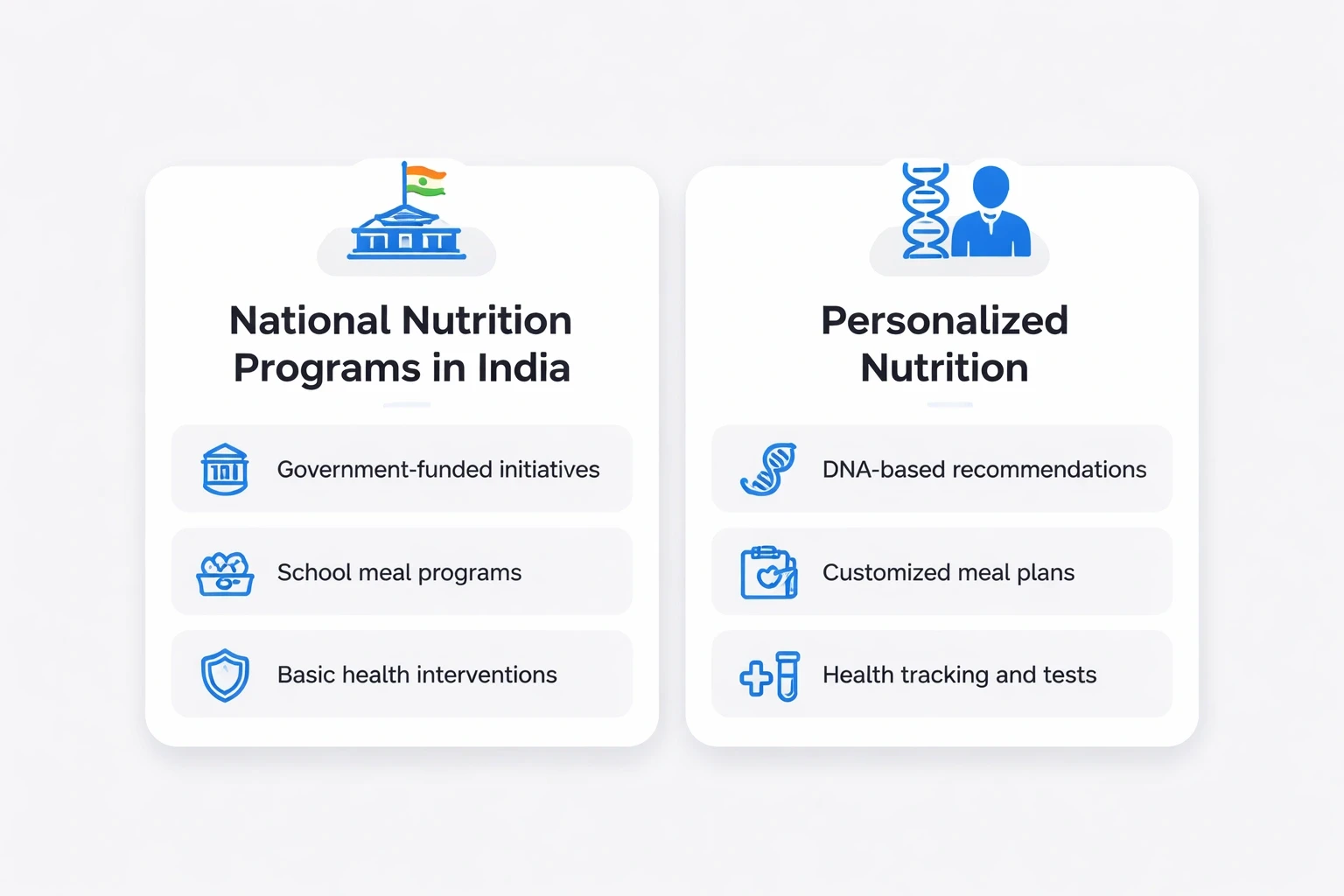
It’s actually a suite of government initiatives aimed at malnutrition, micronutrient deficiencies, and food security. You’ve got POSHAN Abhiyaan, the Integrated Child Development Services (ICDS), and the Mid-Day Meal Scheme.
These programmes exist because data showed widespread iron, iodine, and vitamin A deficiencies across the country. POSHAN Abhiyaan, launched in 2018, targets stunting, wasting, and anemia in children and women. The Mid-Day Meal Scheme is one of the world's largest school feeding programmes, making sure kids get at least one solid meal a day.
Programme | Focus Area | Target Group |
|---|---|---|
POSHAN Abhiyaan | Malnutrition, stunting, anemia | Children, pregnant women |
ICDS | Holistic child development | Children under 6, mothers |
Mid-Day Meal Scheme | School nutrition | School-going children |
National Iodine Deficiency Disorders Programme | Iodine deficiency | General population |
These initiatives have moved the needle on public health. Yet they operate on population averages, not individual biochemistry.
Why Population-Level Programmes Can't Replace Personal Nutrition Plans
Population-level data deals in averages. It doesn't know that you have insulin resistance, or that your thyroid is underactive. A working professional with a hormonal imbalance needs a completely different approach than a child needing iron supplementation. Generic guidelines simply can't account for your specific health conditions.
A national programme might recommend a certain amount of daily protein or iron. But if you have PCOS, your insulin sensitivity, hormone balance, and carbohydrate tolerance are completely different from someone without the condition. Someone managing Crohn's disease or liver enzyme imbalances needs meal timing and food choices tailored to their gut health, not a general recommendation.
This is why why generic diets fail is such a critical topic for anyone serious about long-term health. Government programmes serve as a floor, not a ceiling.
Some real gaps you'll notice with generic frameworks:
No accounting for hormonal conditions like PCOS or thyroid imbalances
No personalization for weight loss versus weight gain goals
No adjustment for food preferences, allergies, or cultural eating patterns
No real-time monitoring or course correction based on progress
How Personalized Diet Plans Build on National Nutrition Goals
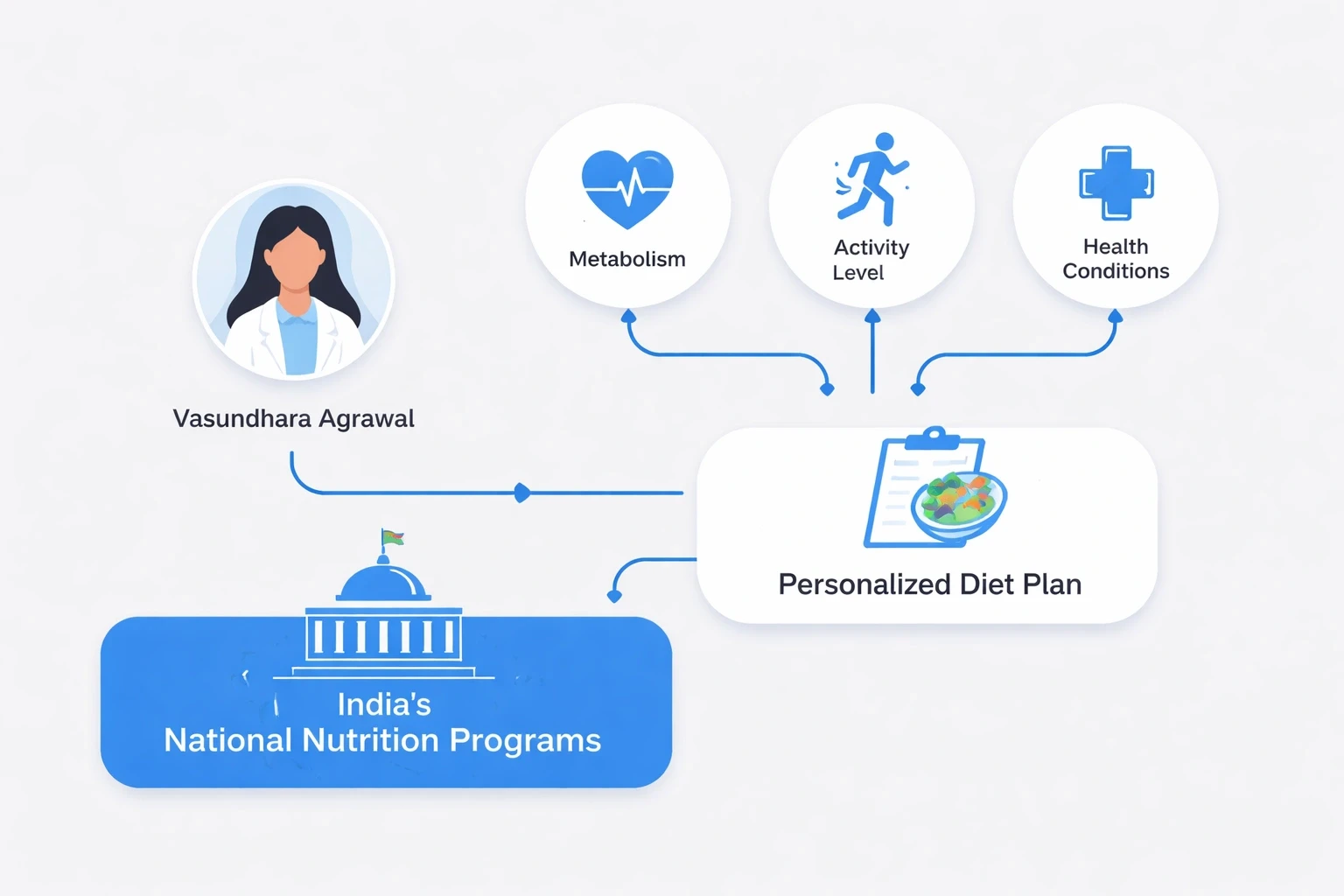
Personalized plans take the core principles of national programmes and refine them for the individual. Instead of broad recommendations, you get meal plans based on your metabolic rate, activity level, and health conditions.
Vasundhara Agrawal's practice focuses on this shift. With over 16 years of experience and 5,000+ clients, the goal is nutrient-complete plans without macro or micro deficiencies. It mirrors the goals of national programmes but adds the layer of customization that mass initiatives cannot provide.
Take someone dealing with insulin resistance and PCOS. A national programme might suggest general dietary diversity. A personalized approach looks at your specific PCOD diet chart needs, factoring in insulin-stable meals and hormone balance. That's the difference between a one-size-fits-all label and a custom-fit garment.
Personalized plans typically include:
Weekly diet charts tailored to your schedule
Portion guidance specific to your body type and goals
Recipe ideas that fit your regional and cultural preferences
Support for real-life scenarios like travel, festivals, and dining out
Regular monitoring to track progress and adjust as needed
Bridging the Gap: From Public Health to Personal Health
We have to see these two frameworks as partners, not competitors. National programmes establish essential baseline literacy about food groups, deficiencies, and fortification. Personalized consultations then layer in individual biochemistry, lifestyle patterns, and specific health conditions.
India’s nutritional landscape has changed. Urban professionals face different challenges than the rural populations targeted by schemes like ICDS. Sedentary lifestyles, processed food consumption, and chronic stress create modern nutrition problems that older programmes weren't designed to address.
This is where concepts like the 30-40-30 lunch formula become relevant. It's a macro-balancing strategy that goes beyond basic dietary diversity messaging. Similarly, understanding your body rhythm for meal timing offers a level of precision that national guidelines simply don't cover.
For specific conditions, personalization becomes even more critical:
PCOS and hormonal health: Requires understanding PCOS-friendly fruits and avoiding trigger foods
Thyroid imbalances: Needs a specific PCOS and thyroid diet chart for hormonal stability
Fertility goals: Benefits from fertility-boosting foods and stage-specific IVF nutrition
Sustainable weight loss: Demands strategies to avoid crash diets while fixing metabolism
What This Means for You in 2026
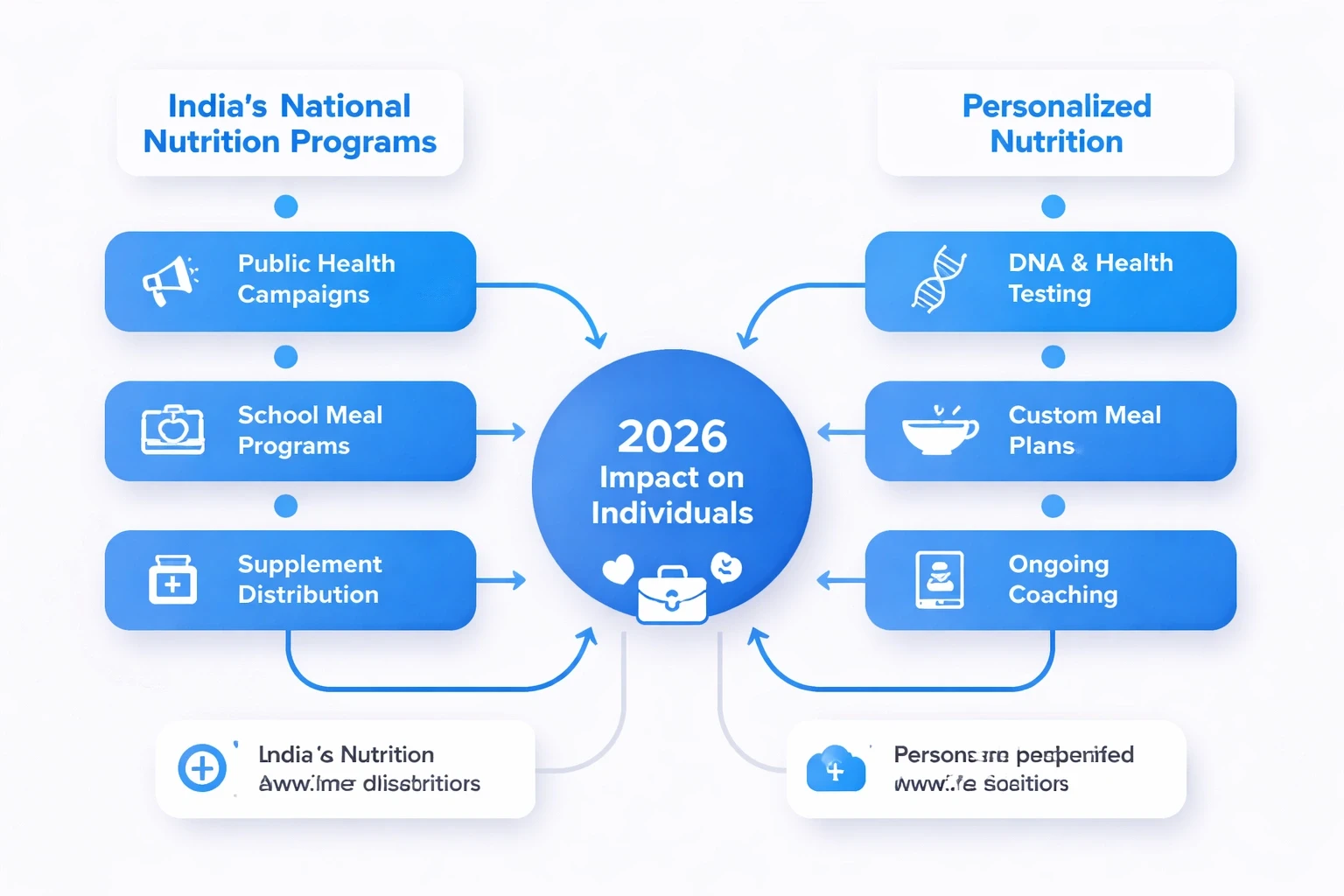
Nutrition awareness in India has grown, partly thanks to national programmes raising baseline literacy. However, 2026 brings increased focus on lifestyle diseases, hormonal imbalances, and metabolic disorders that require more nuanced care. Public health messaging isn't built for this complexity.
More Indians are working corporate jobs with sedentary routines and high stress. This shift has fueled demand for workplace wellness solutions and personalized corporate diet plans. Companies are starting to see that employee health directly impacts productivity.
If you're navigating specific health challenges right now, here is how to think about your next steps:
Start with awareness: Understand basic nutrition principles that national programmes promote
Identify your gaps: Recognize where generic advice falls short for your specific situation
Seek personalization: Look for tailored diet plans that address your unique biochemistry
Monitor progress consistently: Regular check-ins improve compliance and results significantly
Research consistently shows that professional monitoring increases diet compliance. This holds true whether you're managing PCOS, working toward sustainable weight loss, or simply trying to optimize energy and gut health.
Making the Right Choice for Your Nutrition Journey
Choosing between generic guidelines and personalized plans depends on your specific goals. National programmes work well for establishing basic nutritional literacy. But if you have specific conditions, weight goals, or lifestyle constraints, personalized consultation delivers far better outcomes.
Vasundhara Agrawal's approach combines the foundational wisdom promoted by public health initiatives with individualized precision. Her plans start at ₹2,000 for a one-time consultation, scaling up to comprehensive 24-week programs for ₹24,000. Each plan considers your food preferences, cultural background, and specific health conditions.
Whether you're dealing with insulin resistance, exploring realistic PCOS weight loss targets, or simply want better energy throughout your day, personalized nutrition bridges the gap that national programmes leave open. You can learn more about the consultation process and pricing
More Blog Post
HEALTH
DIET
Why Generic Diets Fail: Personalized Nutrition Tips for Your Body
Discover why generic diets fail and how personalized nutrition can fix fatigue, gut issues, weight plateaus, and hormone imbalances.
Team Vasundhara
|
HEALTH
DIET
Sustainable Weight Loss: Avoid Crash Diets & Fix Your Metabolism
Crash diets fail. Learn sustainable weight loss tips to fix metabolism, eat real food, and build healthy habits for lasting results.
Team Vasundhara
|
HEALTH
DIET
What Makes Food 'Light' and How to Eat Lightly for Better Health
Discover what makes food 'light' and how to eat lightly for better digestion, energy, and overall health without restriction. Learn about nutrtion and diet
Team Vasundhara
|

HEALTH
DIET
Low-Calorie Dinner Ideas for Better Sleep & Energy
Discover low-calorie dinner recipes that boost sleep, reduce blood sugar spikes, and keep you energized. Nutrient-dense, satisfying meals under 450 calories. Read more.
Team Vasundhara
|

HEALTH
DIET
Optimize Meals with Body Rhythm: Personalized Nutrition Guide
Align meals with your body’s rhythm to boost digestion, energy, and weight loss. Get personalized nutrition tips for lasting health.
Team Vasundhara
|
HEALTH
DIET
Healthy Workplace Snacks to Avoid the 3 PM Crash | Vasundhara
Protein‑rich, nutrient‑dense snacks to keep you energized all day and prevent the 3 PM crash. Smart office snacking. #HealthyWorkplace #WeightLoss
Team Vasundhara
|
HEALTH
DIET
Smart Evening Snacks: Fuel Your Body, Not Your Cravings
Learn why you get hungry at night, how smart snacks prevent overeating, boost sleep, and aid sustainable weight loss.
Team Vasundhara
|
HEALTH
DIET
Beat the 4 PM Slump with Healthy Snacks | Metabolism Health
Beat the 4 PM slump with smart snacks. Protein, fiber & healthy fats keep you full, avoid crashes. Sustainable weight loss starts now.
Team Vasundhara
|
HEALTH
DIET
Lunch Fix: 30% Protein, 40% Veggies, 30% Carbs for Weight Loss
Discover the 30% protein, 40% veggies, 30% carbs lunch formula to stabilize blood sugar and avoid cravings. Simple, effective, and easy to prepare.
Team Vasundhara
|
HEALTH
DIET
The Science of Mid-Morning Snacks: Boost Metabolism & Energy
Discover why mid-morning snacks boost metabolism, balance hormones, and prevent overeating. Explore 10 healthy options for sustained energy.
Team Vasundhara
|
HEALTH
DIET
Healthy Office Lunch Ideas: 30-40-30 Formula for Energy
Pack a nutritious office lunch using the 30-40-30 formula. Stay full, avoid crashes, and boost productivity with simple lunch box tips.
Team Vasundhara
|
HEALTH
DIET
Smart Snacking Strategies for Healthy Weight Gain
Effective weight‑gain snack ideas that support digestion, avoid empty calories, and boost nutrient intake for sustainable muscle growth.
Team Vasundhara
|
HEALTH
DIET
Healthy 4 PM Snacks to Avoid Evening Binges
Healthy 4 PM snack ideas to stabilize blood sugar, prevent evening binges, and support weight loss, PCOS, and metabolism with nutrient-dense options.
Team Vasundhara
|
HEALTH
DIET
The 30-40-30 Lunch Formula: Beat Afternoon Slumps
Discover the 30-40-30 lunch formula for sustained energy. Balance protein, veggies, and carbs to avoid afternoon crashes and boost productivity.
Team Vasundhara
|

HEALTH
DIET
Healthy Hot Snacks: Beat the 3 PM Slump Without Crashing
Satisfy your 3 PM hunger with hot, nutrient-rich snacks that boost metabolism and avoid blood sugar crashes. Discover quick, healthy options here.
Team Vasundhara
|

HEALTH
DIET
30-40-30 Lunch Formula: Beat Afternoon Slumps with Healthy Meals
15 healthy lunch recipes using the 30-40-30 macro formula (protein, veg, carbs) for energy boost, meal prep tips, and portion control.
Team Vasundhara
|

HEALTH
DIET
Healthy Snack Recipes: Homemade Alternatives to Processed Foods
Discover healthy, homemade snack recipes that beat processed snacks. Get sustained energy with fresh, nutrient-packed options.
Team Vasundhara
|
HEALTH
DIET
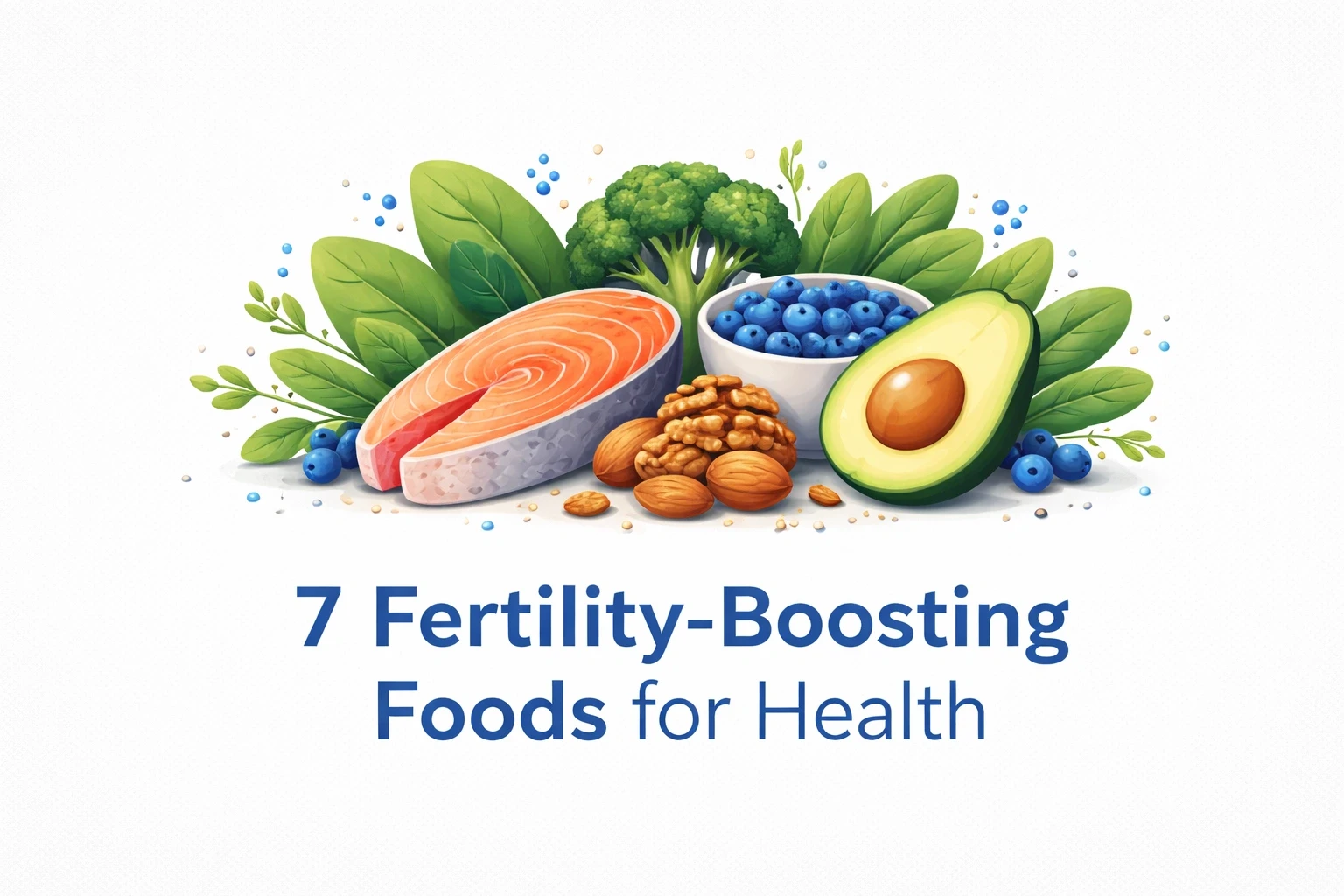
7 Fertility-Boosting Foods for Optimal Reproductive Health
Explore 7 nutrient-rich foods that aid hormonal balance, egg quality & reproductive health—like fatty fish and leafy greens—to boost fertility.
Team Vasundhara
|
HEALTH
DIET
PCOS & Thyroid Diet Chart: Balanced Eating for Hormonal Health
PCOS & thyroid diet chart balances insulin, hormones, and metabolism for stable blood sugar, thyroid support, and sustainable weight loss.
Team Vasundhara
|
HEALTH
DIET
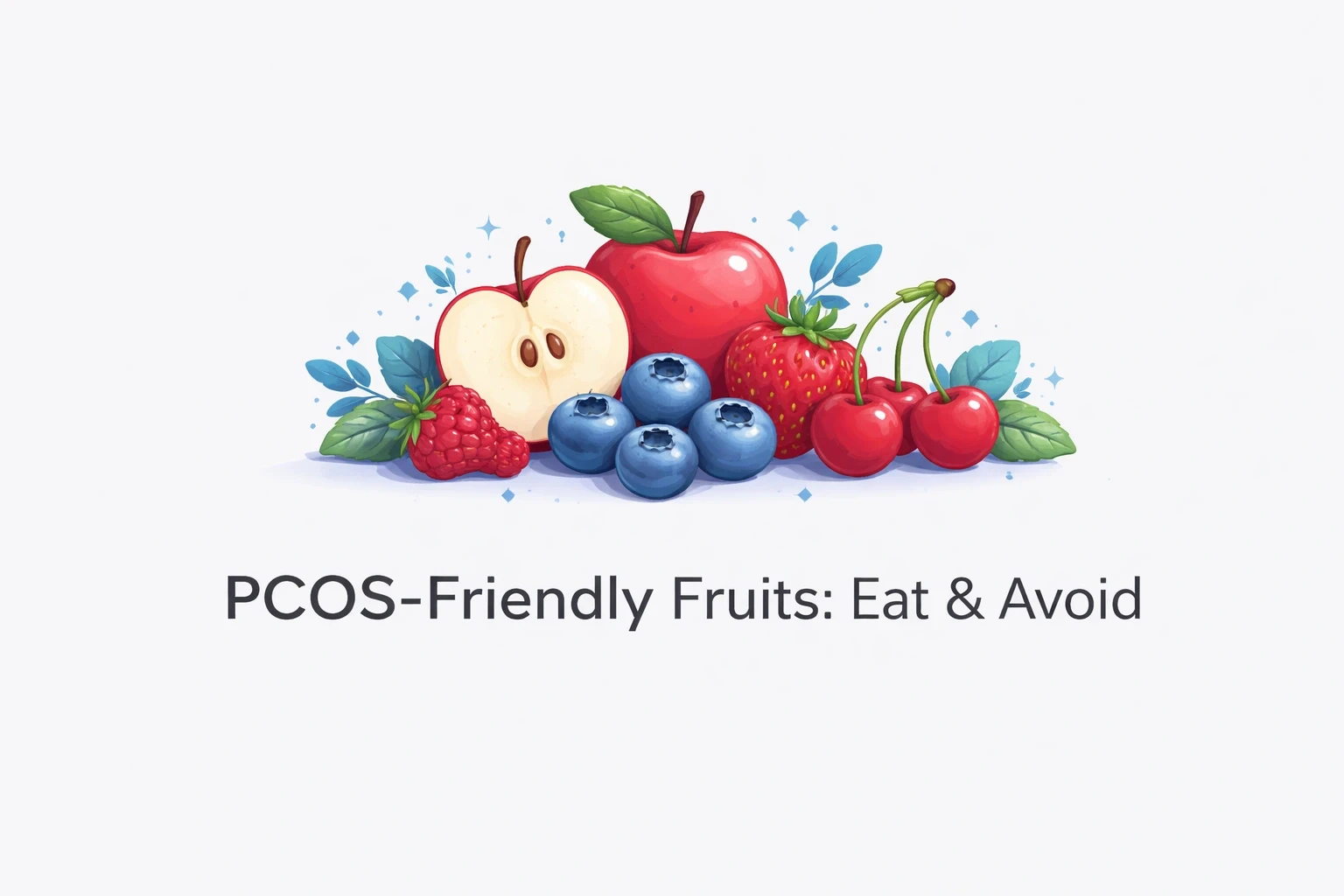
PCOS-Friendly Fruits: What to Eat & Avoid
Manage PCOS symptoms with the right fruit choices. Learn which fruits to eat and avoid for hormonal balance and insulin resistance.
Team Vasundhara
|
HEALTH
DIET
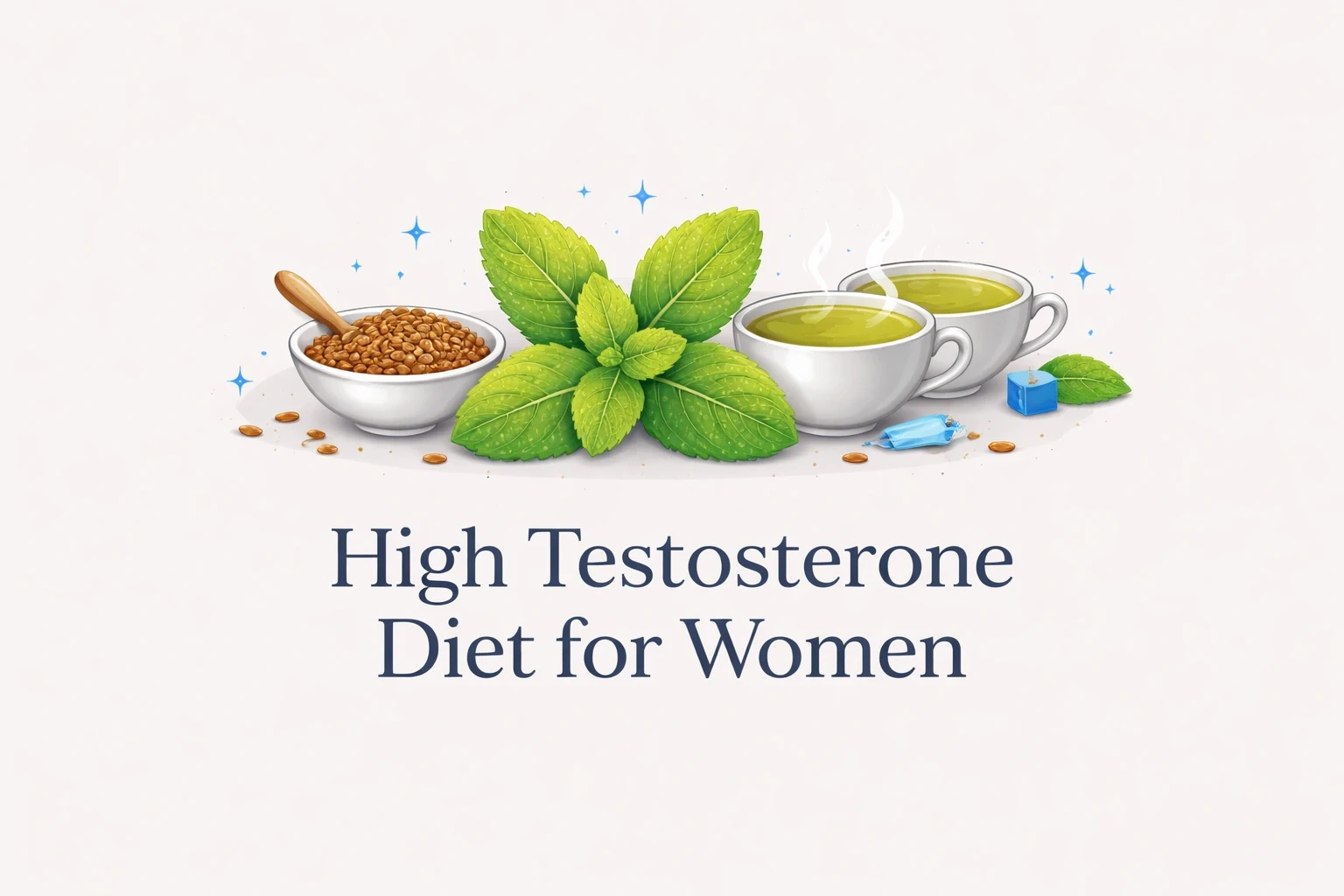
Managing High Testosterone: Diet Tips for Women
Diet tips to lower high testosterone in women: spearmint, flaxseeds, green tea and other anti‑androgen foods for natural hormonal balance.
Team Vasundhara
|
HEALTH
DIET
Dates & PCOS: Sugar‑Sweetened Fruits Impact Insulin Resistance
Dates high in sugar can spike insulin and worsen PCOS. Pair with protein to improve blood sugar control and hormone balance.
Team Vasundhara
|

HEALTH
DIET
PCOD Diet Chart: Insulin-Stable Meals & Hormone Balance
Structured PCOD diet chart with low‑glycemic meals, lean protein, anti‑inflammatory fats to stabilize insulin and balance hormones.
Team Vasundhara
|
HEALTH
DIET
Milk & PCOS: How Dairy Impacts Hormones & Insulin Resistance
Discover dairy's impact on PCOS, insulin resistance, hormones. Compare A1 vs A2 milk, fermented benefits, and personalized PCOS solutions.
Team Vasundhara
|
HEALTH
DIET
PCOS Indian Diet: Hormonal Balance with Heritage Foods
Traditional Indian foods like bajra roti & paneer help PCOS: balance insulin, lower androgens, thrive on a heritage diet.
Team Vasundhara
|
HEALTH
DIET
Best Morning Drink for PCOS: Fenugreek or Jeera Water
Warm water with soaked fenugreek or jeera‑methi seeds: top PCOS morning drink, stabilizes sugar, reduces bloating, boosts insulin sensitivity.
Team Vasundhara
|
HEALTH
DIET
IVF Diet Chart: Stage-Specific Nutrition for Fertility Success
IVF diet chart for each treatment stage—boost egg quality, implantation & hormone balance during stimulation, retrieval, and two‑week wait.
Team Vasundhara
|
HEALTH
DIET
Realistic PCOS Weight Loss: 2-4 kg in a Month Without Crash Diets
Achieve 2-4 kg PCOS weight loss in a month with sustainable habits. Avoid crash diets and focus on consistency for long-term results.
Team Vasundhara
|
HEALTH
DIET
Why HIIT Might Harm PCOS & Better Workouts
Discover why intense workouts like HIIT can worsen PCOS symptoms and learn PCOS-friendly exercises that support hormonal balance and weight loss.
Team Vasundhara
|

HEALTH
DIET
India's 2026 Double Burden: Undernutrition and Obesity Coexist
Explore India's 2026 nutrition crisis: undernutrition meets obesity, micronutrient gaps, and failing generic diets. Embrace personalized nutrition.
|

HEALTH
DIET
Protein-Rich Indian Snacks for a Healthy July 2026
Discover affordable, protein‑rich Indian snacks to fuel your day without imported bars. Build a snack routine that keeps you full and focused
|
HEALTH
DIET
Personalized Nutrition vs National Programs in India
Learn how India's National Nutrition Programs set health standards and how personalized nutrition tailors to individual needs for optimal results.
|

HEALTH
DIET
Personalized Thyroid Diet: 5 Key Nutrients for Health
Get a personalized thyroid diet chart, essential nutrients, timing tips, avoid mistakes, and boost metabolism with expert advice.
|
HEALTH
DIET
India's 2026 Nutrition Policy vs. Personalized Health Needs
India's 2026 Nutrition Policy targets the masses, but misses individual health. Learn why personalized nutrition is key for real results.
|

HEALTH
DIET
Coffee, PCOS & Moderation: What You Need to Know
Discover how coffee impacts PCOS. Learn about cortisol, timing, and additives that matter. Find out safe consumption tips for women with PCOS.
|