HEALTH
DIET
PCOS-Friendly Fruits: What to Eat & Avoid

Team Vasundhara
|
Share to
Manage PCOS symptoms with the right fruit choices. Learn which fruits to eat and avoid for hormonal balance and insulin resistance.
If you have PCOS, fruit is a minefield. Berries, apples, pears, citrus, cherries, and kiwi? Generally safe they're low-glycemic and won't send your blood sugar spiraling. But watermelon, pineapple, mangoes, grapes, and dried fruit are trouble. They spike glucose and throw your hormones off balance.
This isn't just diet-culture noise. About 70% of women with polycystic ovary syndrome deal with insulin resistance. Picking the right fruit isn't trivial; it's a real lever for managing symptoms.
Why fruit selection actually matters
Insulin resistance messes with how you process carbs. Your body pumps out way too much insulin, which triggers androgen production the hormonal chain behind acne, missed periods, and weight gain that won't budge.
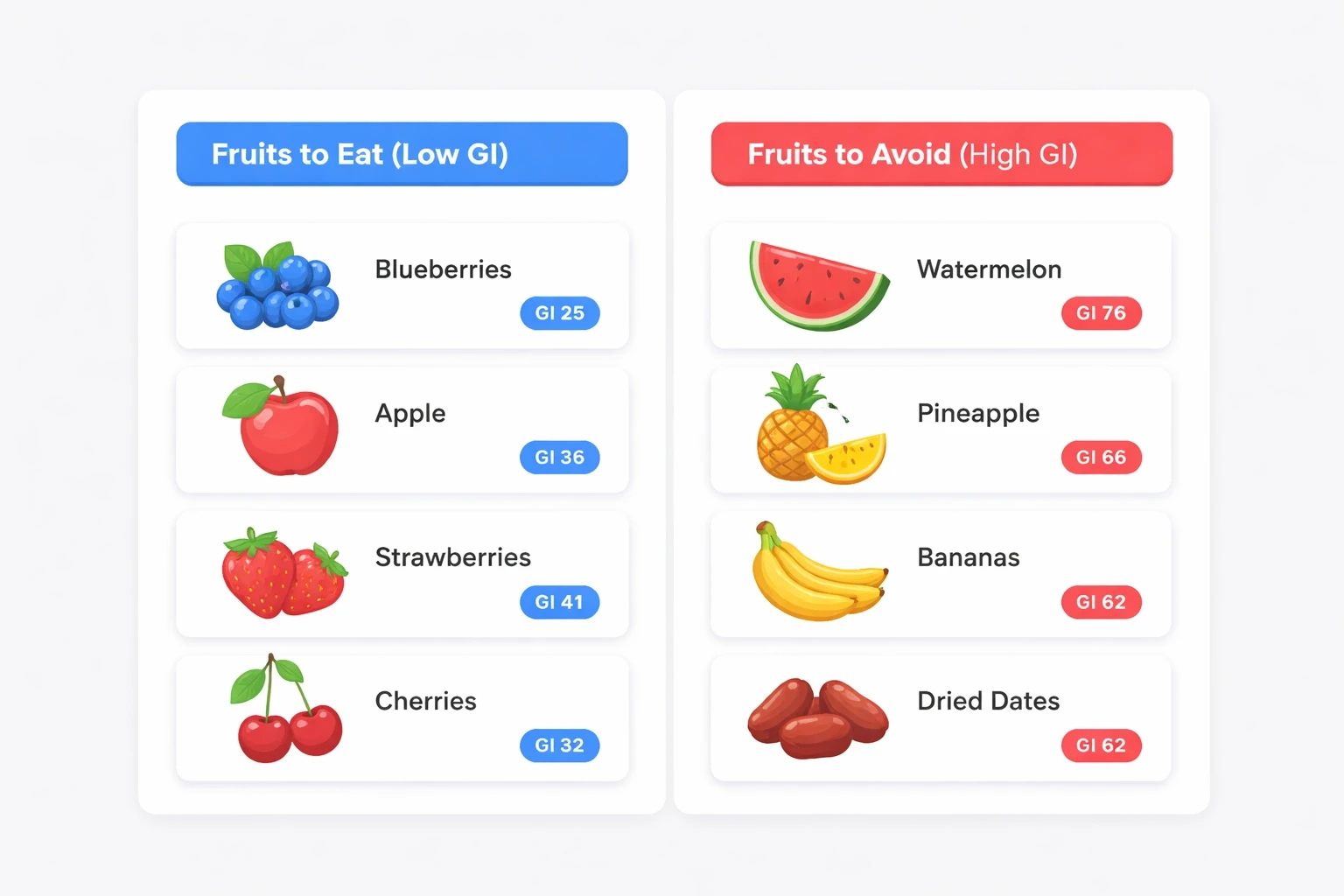
The glycemic index (GI) tracks how fast foods raise blood sugar. Anything over 70 is bad news. Watermelon sits at 72. Pineapple is 66. Dried dates? 103. That quick energy burst followed by a crash isn't in your head you're literally spiking your blood sugar.
A study in the Journal of Clinical Endocrinology found women with PCOS on low-glycemic diets saw 50% better improvement in menstrual regularity compared to those just cutting calories. The fruit piece of that puzzle mattered.
The fruits to avoid (or at least limit)
Watermelon is the worst offender, which feels unfair for something that's 92% water. But with a GI of 72 and almost no fiber, it hits your bloodstream fast. Two cups pack 21 grams of sugar with zero buffer.
Pineapple has bromelain, which is great for inflammation, but its 66 GI and 16 grams of sugar per cup make it a risk. Mangoes are similar one cup has 23 grams of sugar.
Grapes are little sugar bombs. One cup has 23 grams, and they're dangerously easy to overeat. Before you know it, you've downed 40+ grams of fast-acting carbs.
Dried fruit is deceptive. Dehydration concentrates the sugar. Four dried apricots have triple the sugar per bite of a fresh one. Dates, raisins, and dried cranberries can spike blood sugar faster than a candy bar. Keep these for rare occasions.
Bananas are complicated. Ripe ones with brown spots have a high glycemic load. Slightly green ones have resistant starch that helps stabilize blood sugar. If you eat bananas, go green and always pair with almond butter.
The best fruits for hormonal balance
Berries are the MVPs. GI of 25-40, packed with antioxidants that fight inflammation. One cup of strawberries has 7 grams of sugar and 3 grams of fiber. That's a winning ratio.
Apples (with the skin) give you soluble fiber and polyphenols that help insulin sensitivity. A GI of 36 makes them safe for daily eating, but eat them whole never juiced.
Pears offer 6 grams of fiber per fruit more than most options and a GI of 38. That combo keeps you full. Go for firm pears over soft, overripe ones.
Citrus brings vitamin C and hesperidin, a flavonoid linked to better insulin sensitivity. Grapefruits have naringenin, which helps insulin function. Just eat the fruit, don't juice it.
Cherries have the lowest GI at 22. They taste sweet but are excellent for PCOS. Tart cherries have anthocyanins that lower inflammation and help with sleep.
If you're struggling to fit these into actual meals, personalized nutrition approaches explain why generic lists often fail without considering your specific insulin response.
Timing matters more than you think
Morning is the best window, but don't eat fruit naked. Having berries on an empty stomach still causes a spike. Pair them with Greek yogurt and almonds continuous glucose monitor studies show you can reduce that peak by 35%.
Try eating fruit 60-90 minutes after a meal. This lets your body process the meal's protein and fat first.
Be careful with evening fruit. Your insulin sensitivity drops by up to 25% at night. That same apple creates a bigger insulin response at 8 PM than at 8 AM.
Pre-workout fruit can work if you time it right. Half a green banana 30 minutes before a workout gives muscles quick fuel that gets burned immediately. But if you skip the gym, that fruit becomes an insulin problem.
The idea of meal timing aligned with body rhythms goes beyond fruit and helps build a full strategy.
Portion control that actually works
A serving is one cup of berries, one medium apple, or one small orange. For most women with PCOS, 1-2 servings a day is the sweet spot. Standard advice says 3-4, but that often overwhelms an insulin-resistant metabolism.
Don't let fruit take over your plate. It shouldn't cover more than a quarter of your dish. The rest should be protein, healthy fats, and non-starchy veggies.
Watch out for mixed fruit bowls. Combining high and low GI fruits defaults to the higher impact. A bowl with strawberries, grapes, and pineapple hits you like just pineapple.
Smoothies are a trap. Blending destroys fiber structure. A smoothie with banana, mango, apple juice, and berries can easily hit 60+ grams of sugar in liquid form. If you must, stick to half a cup of berries, protein powder, and a healthy fat.
Your closed fist is about one serving of whole fruit. Use body-based measures so you don't have to carry a scale. For more, healthy snacking strategies show how to fit these portions into a daily routine.
Preparation hacks
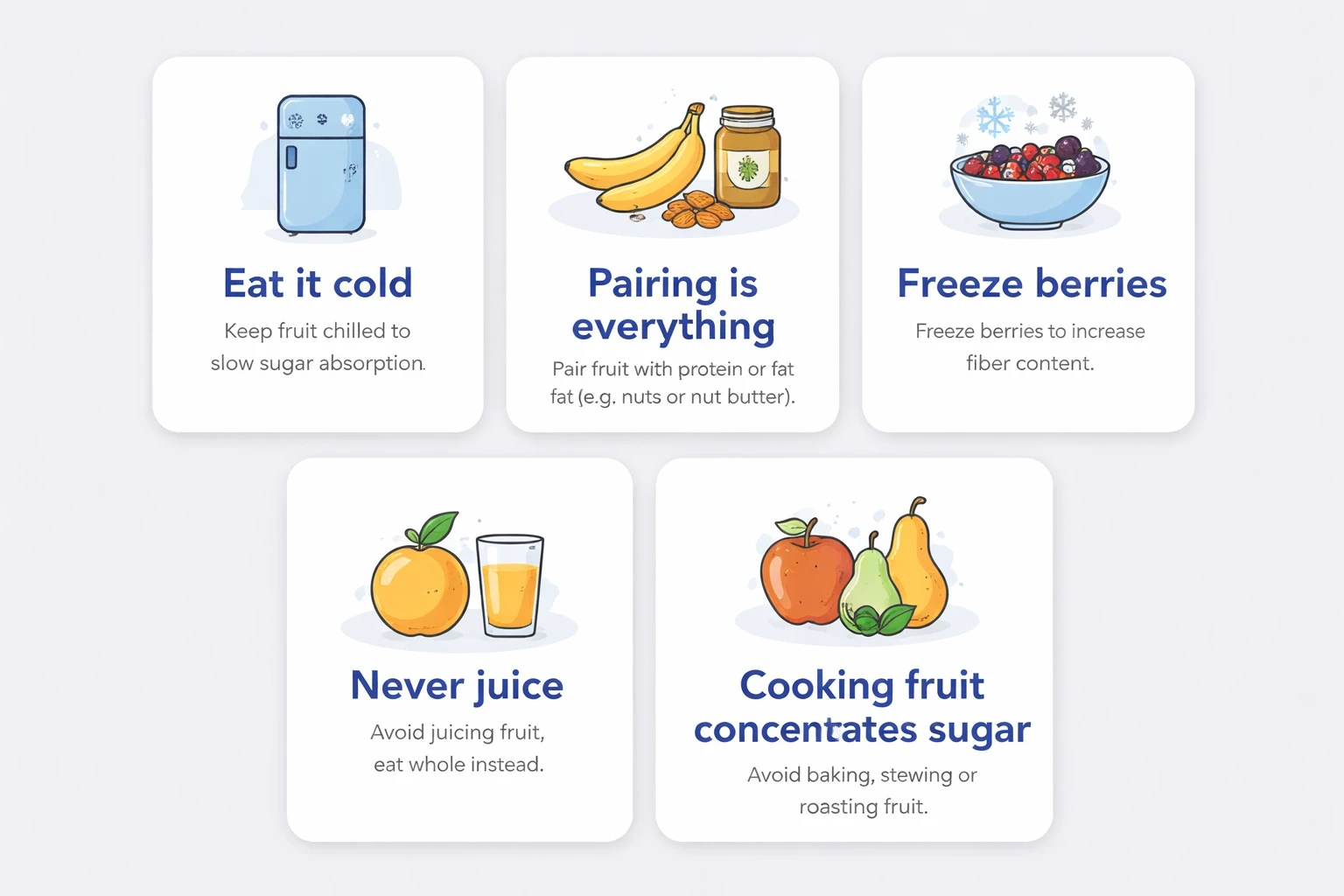
Eat it cold. Refrigerated fruit takes longer to leave your stomach, spreading out sugar absorption. Keep berries and apples in the fridge.
Pairing is everything. Almond butter on half a banana drops its effective glycemic load significantly.
Freezing berries forces you to eat slower. You have to portion and thaw them, which creates a natural pause.
Never juice. An orange has 12 grams of sugar and 3 grams of fiber, and takes 5 minutes to eat. A glass of juice has the sugar of three oranges, zero fiber, and takes 30 seconds to drink.
Cooking fruit concentrates sugar. Baked apples or poached pears should be treats, not daily habits. For full meal structures, lunch formulas for metabolic health provide good frameworks.
The confusing "fruits"
Coconut is technically a fruit but acts nothing like one metabolically. It's mostly fat. Unsweetened coconut is fine.
Avocados are also fruits botanically. With less than 1 gram of sugar, they actually improve insulin sensitivity. Treat them like a veggie.
Tomatoes have 4 grams of sugar and lycopene. Low GI, unlimited.
Plantains are not bananas. Green plantains have resistant starch that acts like fiber. Yellow ones have more sugar. Go for green.
Acai bowls are usually a disaster. Pure acai is fine, but most are topped with granola and honey. Read labels or skip.
Tailoring fruit to your symptoms
Weight loss struggles: Be strict. One serving a day max, berries or citrus only.
Inflammatory PCOS: Load up on cherries, berries, and citrus. The anthocyanins help.
Trying to conceive: Focus on citrus for folate. Avoid high-GI fruits. Low-glycemic diets during fertility treatment show 30% higher pregnancy rates.
Lean PCOS: You might tolerate 2-3 servings of low-GI fruit, but monitor to be sure.
Adrenal PCOS: Small, regular fruit servings can prevent cortisol spikes from low blood sugar. This is different from insulin-driven PCOS, which is why personalized approaches beat generic protocols.
If you also have thyroid issues, the connection between hormonal conditions and diet matters.
Alternatives for sweet cravings
Cucumber with lime and chaat masala. Sweet-and-tangy crunch, zero sugar.
Roasted cinnamon carrots. Surprisingly sweet, and cinnamon helps insulin sensitivity.
Sugar-free gelatin with real berries.
Herbal teas like rooibos or hibiscus. Iced with lemon, they kill juice cravings.
Dark chocolate (85%+). Two squares have minimal sugar and the fat satisfies. Check these healthy snack alternatives for more.
Listen to your body
If you crash 30-60 minutes after fruit, your insulin overreacted. You should feel steady for 2-3 hours.
Hungry again within an hour? Blood sugar dropped too fast. Cut the portion.
Afternoon slump? Might be breakfast fruit. High-GI fruit in the morning often causes a crash 4-6 hours later. Healthy workplace snacks won't fix it if the root cause was breakfast.
Stuck at a weight plateau? It might be the fruit. Just a bit too much carb keeps you out of fat-burning mode.
Break out 24-48 hours after high-GI fruit? That's an androgen surge. Track it.
Build your own plan
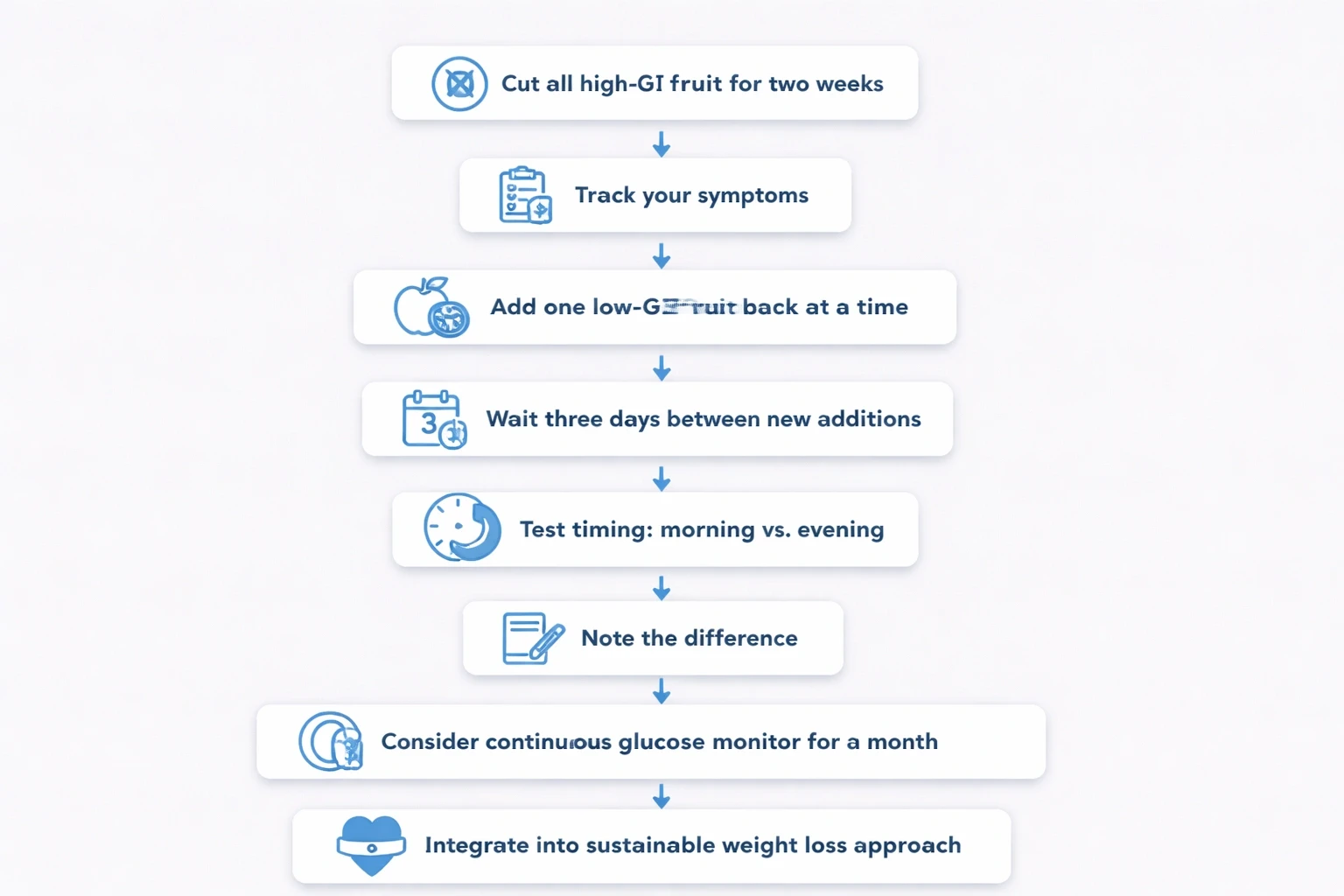
Cut all high-GI fruit for two weeks. Track your symptoms.
Add one low-GI fruit back at a time. Wait three days between new additions.
Test timing. Eat the same fruit in the morning vs. evening. Note the difference.
If you can, try a continuous glucose monitor for a month. It removes the guesswork. This fits into a broader sustainable weight loss approach.
Common mistakes
Dried fruit in trail mix. The sugar cancels out the nut benefits.
Smoothies with 1.5-2 cups of fruit. That's double a serving.
Fruit-flavored yogurt. Often more sugar than ice cream.
Thinking "natural sugar" is different. Your pancreas doesn't know the difference between grape sugar and candy sugar.
Special circumstances
Travel: Pack nut butter. Look for berries or apples. Skip syrupy fruit cups.
Restaurants: Fruit sides are usually melon or pineapple. Ask for berries or sub veggies.
Pregnancy: Focus on citrus and berries. Get pregnancy-specific advice.
Holidays: "Healthy" fruit desserts still pack sugar. Sometimes a small piece of regular dessert is better.
Sickness: Skip the juice. Chicken broth with veggies supports recovery without the spike.
Make it sustainable
Eat seasonally. Spring strawberries, summer berries, fall apples, winter citrus.
Batch prep. Wash berries immediately. Pre-slice apples with lemon water.
Frozen berries are cheaper and just as good.
If your family eats differently, separate your fruit in the fridge. Visual boundaries stop mindless grabbing.
Integrate these habits with mid-morning snack strategies and 4 PM snack approaches.
When to get help
If symptoms persist despite doing everything right, you might need a deeper look. PCOS is complex. You might need tailor-made diet plans.
If conflicting info paralyzes you, a pro can cut through the noise.
If avoiding fruit makes you anxious or leads to binging, get help. PCOS management shouldn't ruin your relationship with food.
If you're confused by your labs, find someone who can translate.
Major life events like fertility treatment complicate things. You need personalized nutrition strategies for the full picture.
Tired of trial and error? Affordable, effective consultation services can save you years of frustration.
More Blog Post
HEALTH
DIET
Why Generic Diets Fail: Personalized Nutrition Tips for Your Body
Discover why generic diets fail and how personalized nutrition can fix fatigue, gut issues, weight plateaus, and hormone imbalances.
Team Vasundhara
|
HEALTH
DIET
Sustainable Weight Loss: Avoid Crash Diets & Fix Your Metabolism
Crash diets fail. Learn sustainable weight loss tips to fix metabolism, eat real food, and build healthy habits for lasting results.
Team Vasundhara
|
HEALTH
DIET
What Makes Food 'Light' and How to Eat Lightly for Better Health
Discover what makes food 'light' and how to eat lightly for better digestion, energy, and overall health without restriction. Learn about nutrtion and diet
Team Vasundhara
|

HEALTH
DIET
Low-Calorie Dinner Ideas for Better Sleep & Energy
Discover low-calorie dinner recipes that boost sleep, reduce blood sugar spikes, and keep you energized. Nutrient-dense, satisfying meals under 450 calories. Read more.
Team Vasundhara
|

HEALTH
DIET
Optimize Meals with Body Rhythm: Personalized Nutrition Guide
Align meals with your body’s rhythm to boost digestion, energy, and weight loss. Get personalized nutrition tips for lasting health.
Team Vasundhara
|
HEALTH
DIET
Healthy Workplace Snacks to Avoid the 3 PM Crash | Vasundhara
Protein‑rich, nutrient‑dense snacks to keep you energized all day and prevent the 3 PM crash. Smart office snacking. #HealthyWorkplace #WeightLoss
Team Vasundhara
|
HEALTH
DIET
Smart Evening Snacks: Fuel Your Body, Not Your Cravings
Learn why you get hungry at night, how smart snacks prevent overeating, boost sleep, and aid sustainable weight loss.
Team Vasundhara
|
HEALTH
DIET
Beat the 4 PM Slump with Healthy Snacks | Metabolism Health
Beat the 4 PM slump with smart snacks. Protein, fiber & healthy fats keep you full, avoid crashes. Sustainable weight loss starts now.
Team Vasundhara
|
HEALTH
DIET
Lunch Fix: 30% Protein, 40% Veggies, 30% Carbs for Weight Loss
Discover the 30% protein, 40% veggies, 30% carbs lunch formula to stabilize blood sugar and avoid cravings. Simple, effective, and easy to prepare.
Team Vasundhara
|
HEALTH
DIET
The Science of Mid-Morning Snacks: Boost Metabolism & Energy
Discover why mid-morning snacks boost metabolism, balance hormones, and prevent overeating. Explore 10 healthy options for sustained energy.
Team Vasundhara
|
HEALTH
DIET
Healthy Office Lunch Ideas: 30-40-30 Formula for Energy
Pack a nutritious office lunch using the 30-40-30 formula. Stay full, avoid crashes, and boost productivity with simple lunch box tips.
Team Vasundhara
|
HEALTH
DIET
Smart Snacking Strategies for Healthy Weight Gain
Effective weight‑gain snack ideas that support digestion, avoid empty calories, and boost nutrient intake for sustainable muscle growth.
Team Vasundhara
|
HEALTH
DIET
Healthy 4 PM Snacks to Avoid Evening Binges
Healthy 4 PM snack ideas to stabilize blood sugar, prevent evening binges, and support weight loss, PCOS, and metabolism with nutrient-dense options.
Team Vasundhara
|
HEALTH
DIET
The 30-40-30 Lunch Formula: Beat Afternoon Slumps
Discover the 30-40-30 lunch formula for sustained energy. Balance protein, veggies, and carbs to avoid afternoon crashes and boost productivity.
Team Vasundhara
|
HEALTH
DIET
Healthy Hot Snacks: Beat the 3 PM Slump Without Crashing
Satisfy your 3 PM hunger with hot, nutrient-rich snacks that boost metabolism and avoid blood sugar crashes. Discover quick, healthy options here.
Team Vasundhara
|

HEALTH
DIET
30-40-30 Lunch Formula: Beat Afternoon Slumps with Healthy Meals
15 healthy lunch recipes using the 30-40-30 macro formula (protein, veg, carbs) for energy boost, meal prep tips, and portion control.
Team Vasundhara
|

HEALTH
DIET
Healthy Snack Recipes: Homemade Alternatives to Processed Foods
Discover healthy, homemade snack recipes that beat processed snacks. Get sustained energy with fresh, nutrient-packed options.
Team Vasundhara
|
HEALTH
DIET
7 Fertility-Boosting Foods for Optimal Reproductive Health
Explore 7 nutrient-rich foods that aid hormonal balance, egg quality & reproductive health—like fatty fish and leafy greens—to boost fertility.
Team Vasundhara
|
HEALTH
DIET
PCOS & Thyroid Diet Chart: Balanced Eating for Hormonal Health
PCOS & thyroid diet chart balances insulin, hormones, and metabolism for stable blood sugar, thyroid support, and sustainable weight loss.
Team Vasundhara
|
HEALTH
DIET
PCOS-Friendly Fruits: What to Eat & Avoid
Manage PCOS symptoms with the right fruit choices. Learn which fruits to eat and avoid for hormonal balance and insulin resistance.
Team Vasundhara
|
HEALTH
DIET
Managing High Testosterone: Diet Tips for Women
Diet tips to lower high testosterone in women: spearmint, flaxseeds, green tea and other anti‑androgen foods for natural hormonal balance.
Team Vasundhara
|
HEALTH
DIET
Dates & PCOS: Sugar‑Sweetened Fruits Impact Insulin Resistance
Dates high in sugar can spike insulin and worsen PCOS. Pair with protein to improve blood sugar control and hormone balance.
Team Vasundhara
|

HEALTH
DIET
PCOD Diet Chart: Insulin-Stable Meals & Hormone Balance
Structured PCOD diet chart with low‑glycemic meals, lean protein, anti‑inflammatory fats to stabilize insulin and balance hormones.
Team Vasundhara
|
HEALTH
DIET
Milk & PCOS: How Dairy Impacts Hormones & Insulin Resistance
Discover dairy's impact on PCOS, insulin resistance, hormones. Compare A1 vs A2 milk, fermented benefits, and personalized PCOS solutions.
Team Vasundhara
|
HEALTH
DIET
PCOS Indian Diet: Hormonal Balance with Heritage Foods
Traditional Indian foods like bajra roti & paneer help PCOS: balance insulin, lower androgens, thrive on a heritage diet.
Team Vasundhara
|

HEALTH
DIET
Best Morning Drink for PCOS: Fenugreek or Jeera Water
Warm water with soaked fenugreek or jeera‑methi seeds: top PCOS morning drink, stabilizes sugar, reduces bloating, boosts insulin sensitivity.
Team Vasundhara
|
HEALTH
DIET
IVF Diet Chart: Stage-Specific Nutrition for Fertility Success
IVF diet chart for each treatment stage—boost egg quality, implantation & hormone balance during stimulation, retrieval, and two‑week wait.
Team Vasundhara
|
HEALTH
DIET
Realistic PCOS Weight Loss: 2-4 kg in a Month Without Crash Diets
Achieve 2-4 kg PCOS weight loss in a month with sustainable habits. Avoid crash diets and focus on consistency for long-term results.
Team Vasundhara
|
HEALTH
DIET
Why HIIT Might Harm PCOS & Better Workouts
Discover why intense workouts like HIIT can worsen PCOS symptoms and learn PCOS-friendly exercises that support hormonal balance and weight loss.
Team Vasundhara
|

HEALTH
DIET
India's 2026 Double Burden: Undernutrition and Obesity Coexist
Explore India's 2026 nutrition crisis: undernutrition meets obesity, micronutrient gaps, and failing generic diets. Embrace personalized nutrition.
|

HEALTH
DIET
Protein-Rich Indian Snacks for a Healthy July 2026
Discover affordable, protein‑rich Indian snacks to fuel your day without imported bars. Build a snack routine that keeps you full and focused
|
HEALTH
DIET
Personalized Nutrition vs National Programs in India
Learn how India's National Nutrition Programs set health standards and how personalized nutrition tailors to individual needs for optimal results.
|

HEALTH
DIET
Personalized Thyroid Diet: 5 Key Nutrients for Health
Get a personalized thyroid diet chart, essential nutrients, timing tips, avoid mistakes, and boost metabolism with expert advice.
|
HEALTH
DIET
India's 2026 Nutrition Policy vs. Personalized Health Needs
India's 2026 Nutrition Policy targets the masses, but misses individual health. Learn why personalized nutrition is key for real results.
|

HEALTH
DIET
Coffee, PCOS & Moderation: What You Need to Know
Discover how coffee impacts PCOS. Learn about cortisol, timing, and additives that matter. Find out safe consumption tips for women with PCOS.
|