
HEALTH
DIET
PCOD Diet Chart: Insulin-Stable Meals & Hormone Balance

Team Vasundhara
|
Share to
Structured PCOD diet chart with low‑glycemic meals, lean protein, anti‑inflammatory fats to stabilize insulin and balance hormones.
A PCOD diet chart isn't just about what you eat it's about timing, combinations, and keeping your insulin steady. The goal is to build meals around low-glycemic foods, lean proteins, fiber-rich vegetables, and anti-inflammatory fats. Done right, this helps stabilize insulin, balance hormones, and ease symptoms like irregular periods, stubborn weight, and that constant fatigue.
PCOD affects roughly 1 in 5 women in India. It's the most common hormonal disorder I see in women of reproductive age, and honestly, the standard advice most women get is frustratingly vague. "Just lose weight" doesn't work when your hormones are fighting you every step of the way. Your food choices directly influence insulin resistance, testosterone levels, and ovarian function. This is why a structured diet chart isn't optional it's the foundation. What follows is a practical weekly framework based on 16 years of clinical experience.
Why Standard Diet Charts Fail for PCOD
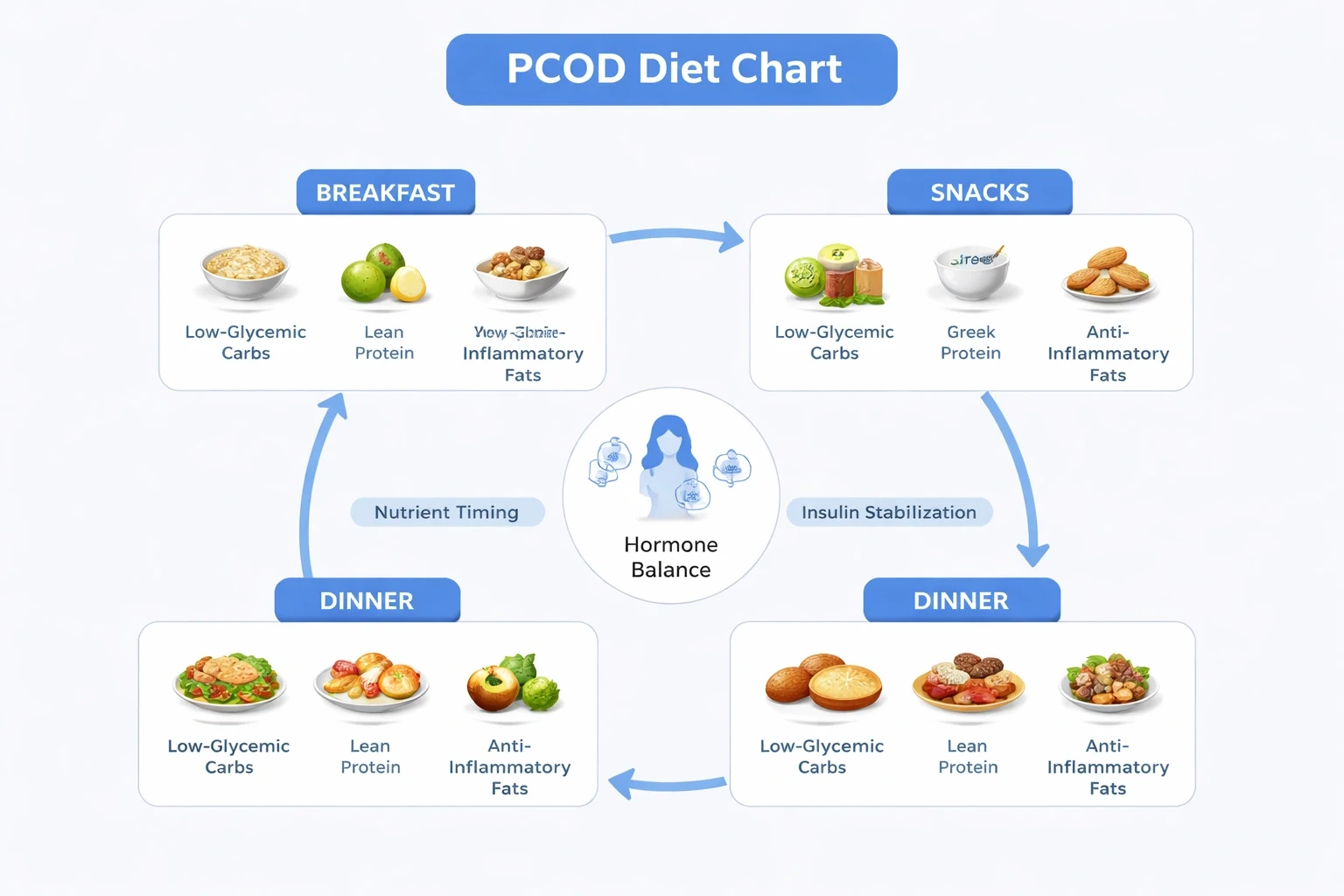
Most generic meal plans treat PCOD like a simple weight issue. It's not. It's a hormonal cascade driven by insulin dysfunction.
Here's the problem: PCOD requires specific nutrient timing and macronutrient ratios. Your body processes carbohydrates differently than someone without insulin resistance. Eat a breakfast of white bread or sugary cereal, and your insulin spikes within 30 minutes. That spike tells your ovaries to pump out excess androgens, disrupting ovulation and making symptoms worse.
Generic charts also miss the inflammation piece. PCOD involves chronic, low-grade inflammation that standard "healthy eating" plans don't touch. You need specific anti-inflammatory foods at the right times to actually calm things down.
And the one-size-fits-all approach? It backfires. A lean PCOD patient needs different portions than someone with more weight to lose. Without personalization, people give up and symptoms stick around. Data shows personalized nutrition plans increase adherence by 67% compared to generic templates.
The 40-30-30 Formula for PCOD Management
Forget complicated counting. Just visualize your plate: 40% complex carbohydrates, 30% protein, and 30% healthy fats. This balance stabilizes insulin while giving your body the building blocks it needs for hormones.
Complex carbohydrates should come from quinoa, brown rice, whole oats, and sweet potatoes. These digest slowly, preventing the glucose surge that triggers insulin resistance. Avoid white rice, maida-based products, and processed cereals even the ones labeled "healthy."
Protein sources include eggs, Greek yogurt, paneer, chicken, fish, legumes, and dals. Aim for 1.2 grams per kilogram of body weight daily. Protein slows carbohydrate absorption and supports lean muscle mass, which improves insulin sensitivity.
Healthy fats from nuts, seeds, avocado, olive oil, and fatty fish reduce inflammation and support hormone production. Your body needs fat to make estrogen and progesterone. Skipping fats actually worsens hormonal imbalance, despite what those outdated low-fat diet myths claim.
Note that this ratio differs from the 30-40-30 lunch formula I recommend for general weight management. PCOD requires slightly more carbohydrates from quality sources to prevent metabolic slowdown.
Sample 7-Day PCOD Diet Chart
This chart provides exact meal timing and portions for a 65 kg woman with moderate PCOD symptoms. Adjust quantities based on your weight and activity level.
Monday
7:00 AM: Warm water with half lemon
7:30 AM: 1 cup green tea with 5 soaked almonds
9:00 AM: 2 besan chilla with mint chutney, 1 cup buttermilk
11:30 AM: 1 small apple with 10 raw pumpkin seeds
1:30 PM: 1 cup brown rice, 1 cup mixed dal, 1 cup bottle gourd sabzi, cucumber salad
4:30 PM: 1 cup sprout salad with lemon
7:00 PM: Grilled paneer tikka (100g) with mint dip
8:30 PM: Vegetable quinoa khichdi (1 bowl), cucumber raita
Tuesday
7:00 AM: Jeera water
7:30 AM: 1 cup cinnamon tea with 6 walnuts
9:00 AM: 2 moong dal cheela, 1 boiled egg, 1 cup green tea
11:30 AM: 1 orange with 1 tablespoon flax seeds
1:30 PM: 2 multigrain roti, grilled chicken (100g), palak sabzi, tomato salad
4:30 PM: Roasted makhana (1 cup) with turmeric
7:00 PM: Chickpea salad with olive oil dressing
8:30 PM: Lauki soup, grilled fish (100g), sautéed vegetables
Wednesday
7:00 AM: Warm water with apple cider vinegar (1 tsp)
7:30 AM: 1 cup chamomile tea with 8 cashews
9:00 AM: Oats upma with vegetables, 1 cup buttermilk
11:30 AM: 1 pear with 1 tablespoon chia seeds soaked
1:30 PM: 1 cup brown rice, rajma curry, bhindi sabzi, onion salad
4:30 PM: Boiled black chana (half cup) with lemon
7:00 PM: Egg white omelet with spinach
8:30 PM: Vegetable daliya, cucumber raita
Thursday
7:00 AM: Methi water
7:30 AM: 1 cup ginger tea with 5 almonds, 3 walnuts
9:00 AM: Ragi dosa (2) with sambar and coconut chutney
11:30 AM: 1 guava with sunflower seeds (1 tablespoon)
1:30 PM: 2 jowar roti, fish curry, mixed vegetable sabzi, cucumber
4:30 PM: Roasted chickpeas (half cup)
7:00 PM: Paneer and vegetable skewers
8:30 PM: Moong dal khichdi, curd
Friday
7:00 AM: Warm water with tulsi leaves
7:30 AM: 1 cup green tea with mixed nuts (10 pieces)
9:00 AM: Vegetable poha with peanuts, 1 boiled egg
11:30 AM: Mixed berries (1 cup) with pumpkin seeds
1:30 PM: 1 cup brown rice, soya curry, turai sabzi, beetroot salad
4:30 PM: Hummus with carrot sticks
7:00 PM: Grilled chicken salad with olive oil
8:30 PM: Vegetable soup, 2 bajra roti, sabzi
Saturday
7:00 AM: Ajwain water
7:30 AM: 1 cup spearmint tea with 6 walnuts
9:00 AM: Quinoa upma with vegetables, buttermilk
11:30 AM: 1 apple with almond butter (1 tablespoon)
1:30 PM: 2 multigrain roti, egg curry, cabbage sabzi, tomato salad
4:30 PM: Roasted foxnuts with pepper
7:00 PM: Tofu tikka with mint chutney
8:30 PM: Mixed vegetable khichdi, raita
Sunday
7:00 AM: Warm lemon water
7:30 AM: 1 cup green tea with mixed seeds
9:00 AM: Vegetable uttapam, sambar
11:30 AM: 1 orange with chia seeds
1:30 PM: 1 cup brown rice, masoor dal, karela sabzi, cucumber
4:30 PM: Sprout bhel (1 cup)
7:00 PM: Grilled fish with lemon
8:30 PM: Vegetable soup, 1 multigrain roti, sabzi
This approach pulls from sustainable weight loss principles but adapts them for the specific hormonal needs of PCOD.
Strategic Snacking for PCOD
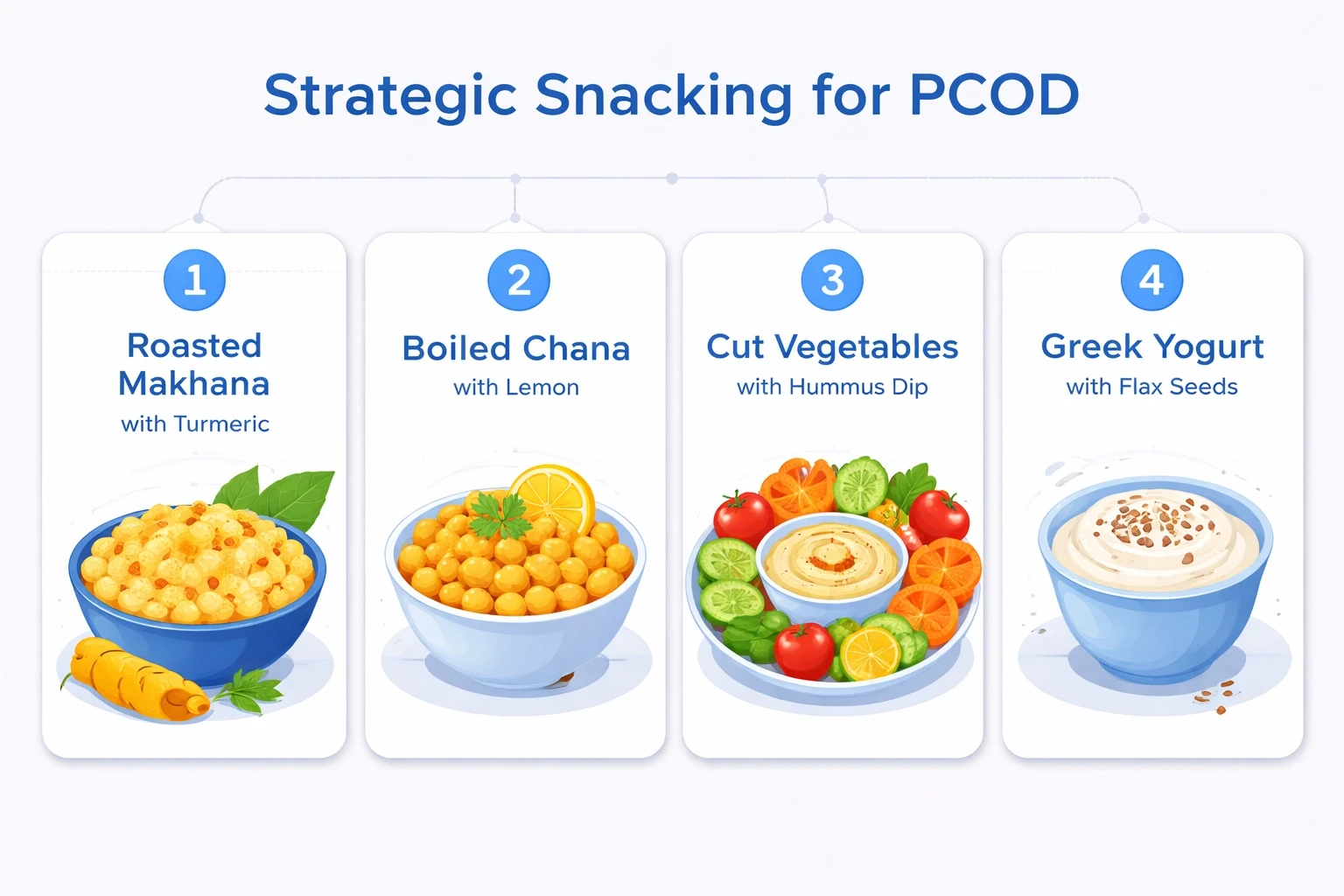
Mid-meal snacks aren't optional extras they prevent the glucose dips that trigger cravings and hormonal chaos. But the snack has to be right.
The 4 PM window is make-or-break for many women. Most experience an energy crash here because of how cortisol and insulin interact. A protein-rich snack at this time prevents the evening binge that spikes insulin right when your body is most resistant.
What works: roasted makhana with turmeric, boiled chana with lemon, veggies with hummus, Greek yogurt with flax seeds, or a handful of mixed nuts. These healthy workplace snacks travel well and don't require a kitchen.
One rule: don't eat fruit alone. Even PCOD-friendly fruits spike blood sugar if there's nothing to slow them down. Pair an apple with almond butter, or eat those berries with some seeds.
Mid-morning snacks around 11:30 AM are also key they keep metabolism humming and stop you from overeating at lunch. This strategic snack timing maintains stable insulin when you're most metabolically active.
Foods to Eliminate Completely
Some foods actively make PCOD worse by spiking insulin or fueling inflammation. Think of this as removing triggers, not just restricting calories.
White sugar and refined carbohydrates trigger immediate insulin surges. White bread, maida, white rice, pasta, packaged cereals even small amounts throw hormones off for hours.
Trans fats are a disaster. Found in packaged snacks, bakery items, and fried foods, they increase inflammatory markers significantly and mess with insulin signaling at the cellular level.
High-glycemic fruits like mangoes, grapes, and watermelon spike blood glucose fast. Even dates, while nutritious, need strict portion control.
Processed soy (not fermented forms like tempeh) can interfere with hormone metabolism. Tofu in moderation is usually fine, but skip the soy protein isolates found in many protein bars.
Dairy is tricky. About 60% of my PCOD patients don't tolerate it well because it increases insulin-like growth factor. If your symptoms are stubborn, try cutting dairy for 3 weeks. Get your calcium from sesame seeds, ragi, and leafy greens instead.
Meal Timing and Circadian Rhythm
When you eat is almost as important as what you eat. Your insulin sensitivity follows a daily rhythm.
Largest meal at 12-2 PM. This is when insulin sensitivity peaks. Your body handles complex carbs best now. Keep evening meals lighter insulin resistance naturally increases after 6 PM.
12-14 hours between dinner and breakfast. This overnight fast lets insulin levels reset and supports cellular repair. Dinner at 8:30 PM means breakfast at 9:00 AM.
Don't skip breakfast. Eating within 2 hours of waking prevents metabolic slowdown and keeps cortisol in check. Waiting until noon backfires.
Space meals 3-4 hours apart. Longer gaps trigger stress hormones. Shorter gaps interfere with digestion and destabilize blood sugar.
This body rhythm approach aligns your eating with natural hormonal fluctuations, making the whole process more effective.
Supplements That Support PCOD Diet
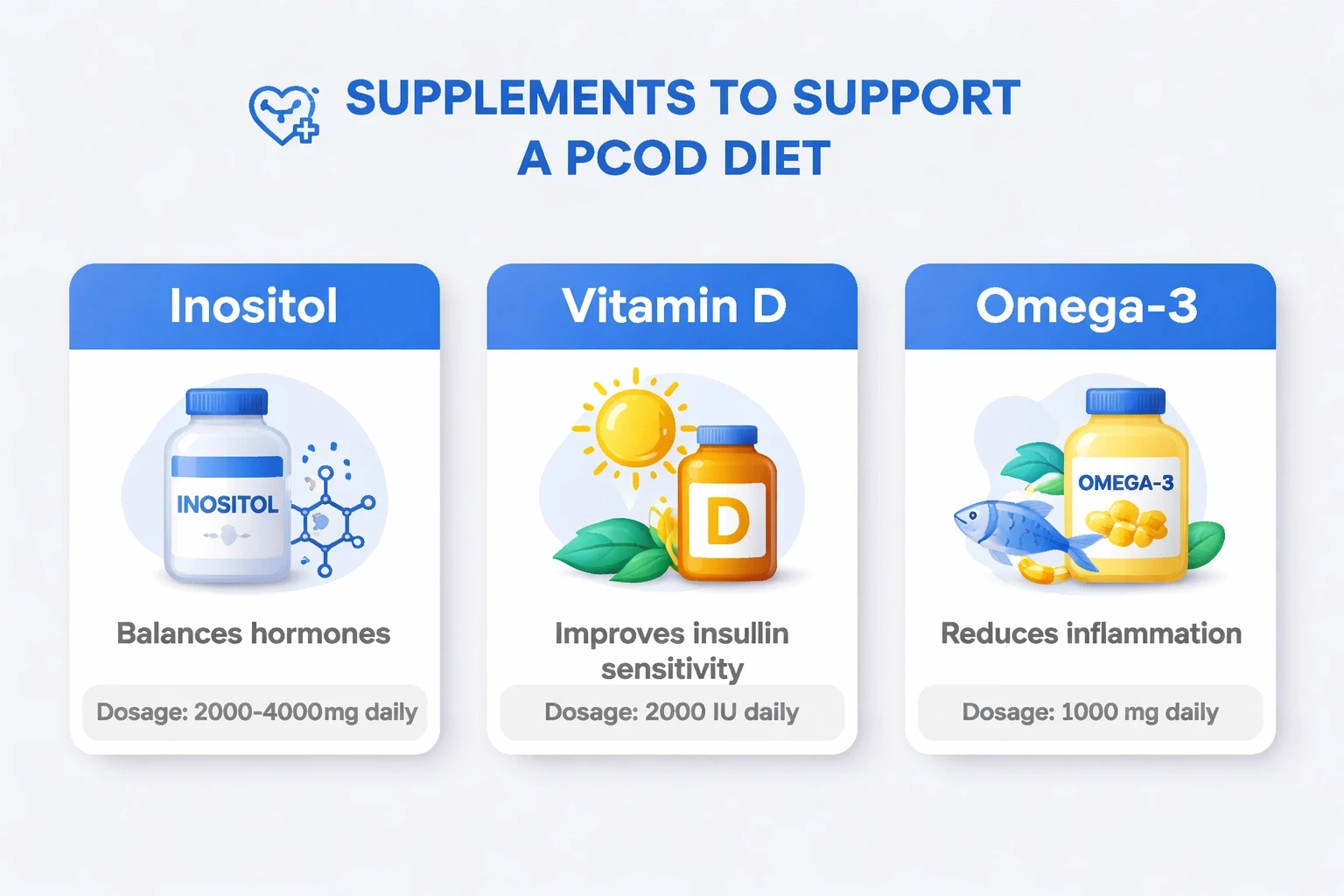
Food first, always. But certain supplements help fill the gaps I see consistently in PCOD patients.
Inositol (myo-inositol specifically) improves insulin sensitivity and ovarian function. Studies show 2-4 grams daily restores ovulation in 70% of patients within 3 months. Take with breakfast.
Vitamin D is low in 85% of PCOD cases and makes insulin resistance worse. Most need 2000-4000 IU daily, but test your levels first. Take it with fat for absorption.
Omega-3s reduce inflammation and support hormone production. If you're not eating fatty fish twice a week, consider 1000 mg EPA/DHA. Plant-based omega-3 from flax doesn't convert well in PCOD bodies.
Magnesium glycinate (300-400 mg) helps insulin sensitivity and eases the anxiety many women with PCOD experience. It also helps sleep take it before bed.
Chromium picolinate (200 mcg) helps cells respond to insulin. Combined with diet, it improves glucose metabolism in insulin-resistant PCOD.
But remember: supplements support, they don't replace. Even the best supplements fail without the dietary foundation in place.
Tracking Progress Beyond the Scale
Weight isn't the whole story. In fact, fixating on the scale often misses the real wins.
Menstrual regularity. This is a primary marker. Within 2-3 cycles of consistent dietary changes, you should notice more predictable timing, better flow, and less severe PMS.
Energy. You should feel steady throughout the day, without the afternoon crash or 4 PM exhaustion. Energy often improves before weight drops.
Skin and hair. Acne, hirsutism, and hair fall gradually improve as androgens normalize. Give it 12-16 weeks.
Blood work. Fasting insulin should drop below 10 μIU/mL. Testosterone should move toward normal range. Test every 3 months.
Sleep and mood. As inflammation decreases and blood sugar stabilizes, both tend to improve. Better sleep then supports hormonal balance a good cycle.
Weight loss averages 3-4 kg monthly with proper portion control, but the number on the scale tells you very little about what's happening hormonally.
Adjusting Your Chart for Work and Travel
Life happens. The chart works best when you can adapt it without abandoning it.
Office days: Prep breakfast and snacks the night before. Carry roasted makhana, nuts, and sprout salad. At lunch, request brown rice or roti instead of white rice most cafeterias will oblige.
Travel: Choose grilled over fried. You can usually approximate the 30-40-30 formula at restaurants. Skip the bread basket, ask for extra vegetables.
Festivals: Don't try to avoid celebrations. Eat your regular meals before events, choose dry fruit-based sweets over pure sugar, and watch portions.
Timing flexibility: If you can't eat at exactly 1:30 PM, 2:00 PM is fine. Missing meals entirely or going 6+ hours without food is what causes problems.
Weekends: This is where many people undo progress. "Cheat weekends" spike insulin and restart cravings. A sustainable plan works seven days a week.
When Diet Alone Isn't Enough
Sometimes diet needs a partner. Know when to seek more support.
If you follow this chart strictly for 12 weeks and see no menstrual improvement, see an endocrinologist. Severe insulin resistance sometimes needs metformin temporarily.
Lean PCOD patients (BMI under 23) with high testosterone may have adrenal involvement requiring a different approach.
If cycles are very irregular (every 2-3 months) or absent, you might need hormonal support to restart things while diet does the long-term work.
Multiple failed attempts point to emotional eating, stress, or undiagnosed issues like thyroid disorders. A comprehensive evaluation helps find what's blocking progress.
Extreme fatigue despite good diet could mean iron or B12 deficiency, or thyroid issues common in PCOD. Blood work helps clarify.
Working with a nutritionist provides adjustments a generic chart can't. Over 5,000 clients with PCOD have found hormonal balance through customized plans that evolve with them.
Building Long-Term PCOD Management Habits
Temporary changes give temporary results. You need habits that eventually run on autopilot.
Start small. Fix breakfast for two weeks. Then add lunch. Trying to overhaul everything at once is overwhelming.
Batch cook. Sunday prep for Monday-Wednesday, Wednesday prep for Thursday-Saturday. It removes the daily "what do I eat?" paralysis.
Change your environment. Keep makhana visible on your desk for 4 PM snacking. Get the packaged snacks out of the house.
Find your non-negotiables. These are the 3-4 rules you follow no matter what. Mine are: no white sugar, protein with every meal, a 12-hour overnight fast, and vegetables at lunch and dinner. These keep me anchored even when life gets chaotic.
Track your food. People who log meals lose 50% more weight and maintain better insulin control. It keeps you honest.
Celebrate the right wins. Your period arriving on time. Skipping the afternoon crash. Clearer skin. These matter more than daily weight fluctuations.
PCOD management is a marathon. But with this structure, you should see measurable improvements in 8-12 weeks. Your body is trying to heal it just needs the right environment. Start with one change today.
For a plan tailored to your specific presentation, lifestyle, and goals, book a consultation for a customized chart with ongoing support.
More Blog Post
HEALTH
DIET
Why Generic Diets Fail: Personalized Nutrition Tips for Your Body
Discover why generic diets fail and how personalized nutrition can fix fatigue, gut issues, weight plateaus, and hormone imbalances.
Team Vasundhara
|
HEALTH
DIET
Sustainable Weight Loss: Avoid Crash Diets & Fix Your Metabolism
Crash diets fail. Learn sustainable weight loss tips to fix metabolism, eat real food, and build healthy habits for lasting results.
Team Vasundhara
|
HEALTH
DIET
What Makes Food 'Light' and How to Eat Lightly for Better Health
Discover what makes food 'light' and how to eat lightly for better digestion, energy, and overall health without restriction. Learn about nutrtion and diet
Team Vasundhara
|

HEALTH
DIET
Low-Calorie Dinner Ideas for Better Sleep & Energy
Discover low-calorie dinner recipes that boost sleep, reduce blood sugar spikes, and keep you energized. Nutrient-dense, satisfying meals under 450 calories. Read more.
Team Vasundhara
|

HEALTH
DIET
Optimize Meals with Body Rhythm: Personalized Nutrition Guide
Align meals with your body’s rhythm to boost digestion, energy, and weight loss. Get personalized nutrition tips for lasting health.
Team Vasundhara
|
HEALTH
DIET
Healthy Workplace Snacks to Avoid the 3 PM Crash | Vasundhara
Protein‑rich, nutrient‑dense snacks to keep you energized all day and prevent the 3 PM crash. Smart office snacking. #HealthyWorkplace #WeightLoss
Team Vasundhara
|

HEALTH
DIET
Smart Evening Snacks: Fuel Your Body, Not Your Cravings
Learn why you get hungry at night, how smart snacks prevent overeating, boost sleep, and aid sustainable weight loss.
Team Vasundhara
|
HEALTH
DIET
Beat the 4 PM Slump with Healthy Snacks | Metabolism Health
Beat the 4 PM slump with smart snacks. Protein, fiber & healthy fats keep you full, avoid crashes. Sustainable weight loss starts now.
Team Vasundhara
|
HEALTH
DIET
Lunch Fix: 30% Protein, 40% Veggies, 30% Carbs for Weight Loss
Discover the 30% protein, 40% veggies, 30% carbs lunch formula to stabilize blood sugar and avoid cravings. Simple, effective, and easy to prepare.
Team Vasundhara
|
HEALTH
DIET
The Science of Mid-Morning Snacks: Boost Metabolism & Energy
Discover why mid-morning snacks boost metabolism, balance hormones, and prevent overeating. Explore 10 healthy options for sustained energy.
Team Vasundhara
|
HEALTH
DIET
Healthy Office Lunch Ideas: 30-40-30 Formula for Energy
Pack a nutritious office lunch using the 30-40-30 formula. Stay full, avoid crashes, and boost productivity with simple lunch box tips.
Team Vasundhara
|
HEALTH
DIET
Smart Snacking Strategies for Healthy Weight Gain
Effective weight‑gain snack ideas that support digestion, avoid empty calories, and boost nutrient intake for sustainable muscle growth.
Team Vasundhara
|
HEALTH
DIET
Healthy 4 PM Snacks to Avoid Evening Binges
Healthy 4 PM snack ideas to stabilize blood sugar, prevent evening binges, and support weight loss, PCOS, and metabolism with nutrient-dense options.
Team Vasundhara
|
HEALTH
DIET
The 30-40-30 Lunch Formula: Beat Afternoon Slumps
Discover the 30-40-30 lunch formula for sustained energy. Balance protein, veggies, and carbs to avoid afternoon crashes and boost productivity.
Team Vasundhara
|

HEALTH
DIET
Healthy Hot Snacks: Beat the 3 PM Slump Without Crashing
Satisfy your 3 PM hunger with hot, nutrient-rich snacks that boost metabolism and avoid blood sugar crashes. Discover quick, healthy options here.
Team Vasundhara
|

HEALTH
DIET
30-40-30 Lunch Formula: Beat Afternoon Slumps with Healthy Meals
15 healthy lunch recipes using the 30-40-30 macro formula (protein, veg, carbs) for energy boost, meal prep tips, and portion control.
Team Vasundhara
|

HEALTH
DIET
Healthy Snack Recipes: Homemade Alternatives to Processed Foods
Discover healthy, homemade snack recipes that beat processed snacks. Get sustained energy with fresh, nutrient-packed options.
Team Vasundhara
|

HEALTH
DIET
7 Fertility-Boosting Foods for Optimal Reproductive Health
Explore 7 nutrient-rich foods that aid hormonal balance, egg quality & reproductive health—like fatty fish and leafy greens—to boost fertility.
Team Vasundhara
|
HEALTH
DIET
PCOS & Thyroid Diet Chart: Balanced Eating for Hormonal Health
PCOS & thyroid diet chart balances insulin, hormones, and metabolism for stable blood sugar, thyroid support, and sustainable weight loss.
Team Vasundhara
|

HEALTH
DIET
PCOS-Friendly Fruits: What to Eat & Avoid
Manage PCOS symptoms with the right fruit choices. Learn which fruits to eat and avoid for hormonal balance and insulin resistance.
Team Vasundhara
|

HEALTH
DIET
Managing High Testosterone: Diet Tips for Women
Diet tips to lower high testosterone in women: spearmint, flaxseeds, green tea and other anti‑androgen foods for natural hormonal balance.
Team Vasundhara
|
HEALTH
DIET
Dates & PCOS: Sugar‑Sweetened Fruits Impact Insulin Resistance
Dates high in sugar can spike insulin and worsen PCOS. Pair with protein to improve blood sugar control and hormone balance.
Team Vasundhara
|
HEALTH
DIET
PCOD Diet Chart: Insulin-Stable Meals & Hormone Balance
Structured PCOD diet chart with low‑glycemic meals, lean protein, anti‑inflammatory fats to stabilize insulin and balance hormones.
Team Vasundhara
|
HEALTH
DIET
Milk & PCOS: How Dairy Impacts Hormones & Insulin Resistance
Discover dairy's impact on PCOS, insulin resistance, hormones. Compare A1 vs A2 milk, fermented benefits, and personalized PCOS solutions.
Team Vasundhara
|
HEALTH
DIET
PCOS Indian Diet: Hormonal Balance with Heritage Foods
Traditional Indian foods like bajra roti & paneer help PCOS: balance insulin, lower androgens, thrive on a heritage diet.
Team Vasundhara
|

HEALTH
DIET
Best Morning Drink for PCOS: Fenugreek or Jeera Water
Warm water with soaked fenugreek or jeera‑methi seeds: top PCOS morning drink, stabilizes sugar, reduces bloating, boosts insulin sensitivity.
Team Vasundhara
|
HEALTH
DIET
IVF Diet Chart: Stage-Specific Nutrition for Fertility Success
IVF diet chart for each treatment stage—boost egg quality, implantation & hormone balance during stimulation, retrieval, and two‑week wait.
Team Vasundhara
|
HEALTH
DIET
Realistic PCOS Weight Loss: 2-4 kg in a Month Without Crash Diets
Achieve 2-4 kg PCOS weight loss in a month with sustainable habits. Avoid crash diets and focus on consistency for long-term results.
Team Vasundhara
|
HEALTH
DIET
Why HIIT Might Harm PCOS & Better Workouts
Discover why intense workouts like HIIT can worsen PCOS symptoms and learn PCOS-friendly exercises that support hormonal balance and weight loss.
Team Vasundhara
|

HEALTH
DIET
India's 2026 Double Burden: Undernutrition and Obesity Coexist
Explore India's 2026 nutrition crisis: undernutrition meets obesity, micronutrient gaps, and failing generic diets. Embrace personalized nutrition.
|

HEALTH
DIET
Protein-Rich Indian Snacks for a Healthy July 2026
Discover affordable, protein‑rich Indian snacks to fuel your day without imported bars. Build a snack routine that keeps you full and focused
|
HEALTH
DIET
Personalized Nutrition vs National Programs in India
Learn how India's National Nutrition Programs set health standards and how personalized nutrition tailors to individual needs for optimal results.
|

HEALTH
DIET
Personalized Thyroid Diet: 5 Key Nutrients for Health
Get a personalized thyroid diet chart, essential nutrients, timing tips, avoid mistakes, and boost metabolism with expert advice.
|
HEALTH
DIET
India's 2026 Nutrition Policy vs. Personalized Health Needs
India's 2026 Nutrition Policy targets the masses, but misses individual health. Learn why personalized nutrition is key for real results.
|

HEALTH
DIET
Coffee, PCOS & Moderation: What You Need to Know
Discover how coffee impacts PCOS. Learn about cortisol, timing, and additives that matter. Find out safe consumption tips for women with PCOS.
|